Comparing Numbers on a Number Line: The Simple 2nd Grade Math Trick That Ends Homework Frustration
Discover the simple left-right rule that makes comparing numbers on a number line easy for 2nd graders. Practical activities, common mistake fixes, and interactive practice tips inside.
Why Number Lines Are a Game-Changer for 2nd Grade Math
Picture this: Your 2nd grader stares at their homework, pencil frozen in mid-air. "Is 47 bigger than 39?" they ask, uncertainty written all over their face. You might wonder if something's wrong, but here's the reassuring truth: this confusion is completely normal, and there's a surprisingly simple solution.
Number lines transform abstract math into something children can actually see. Instead of memorizing rules or guessing, kids learn to visualize where numbers live in relation to each other. This visual approach taps into how young brains naturally process information, making the "aha moment" happen faster.
When it comes to comparing numbers on a number line, 2nd grade is the perfect time to master this foundational skill. The concept builds the mental framework your child needs for addition, subtraction, and eventually, working with negative numbers in later grades. Think of it as giving your child a superpower that makes all future math easier.
In this guide, you'll discover the one simple rule that makes number comparison click, practical activities you can do at home, and how interactive practice takes learning from frustrating to fun. Let's turn that homework struggle into math confidence.
What Does Comparing Numbers on a Number Line Mean?
Before diving into strategies, let's make sure we're on the same page about what number comparison actually involves. Comparing numbers means determining which number is greater (bigger) or lesser (smaller) than another. For 2nd graders, this skill connects directly to understanding place value and the relationships between numbers up to 1,000.
A number line is simply a straight line with numbers placed at equal intervals. Think of it like a ruler for numbers, where each number has its own specific spot. When children plot numbers on this line, they can physically see which one comes first and which one comes later.
Here's why this matters: The number line makes an invisible concept visible. Instead of trying to remember abstract rules, your child can point to two numbers and instantly see their relationship. It's the difference between telling someone directions and showing them a map.
In 2nd grade math, children typically work with number lines ranging from 0 to 100 or even 0 to 1,000. They learn to:
- Plot numbers in their correct positions
- Compare two numbers by looking at their positions
- Use symbols like < (less than) and > (greater than) to write comparison statements
This skill appears throughout the Common Core standards for 2nd grade (specifically 2.NBT.A.4), making it essential for classroom success and standardized testing.
The Simple Rule: Left Is Less, Right Is Greater
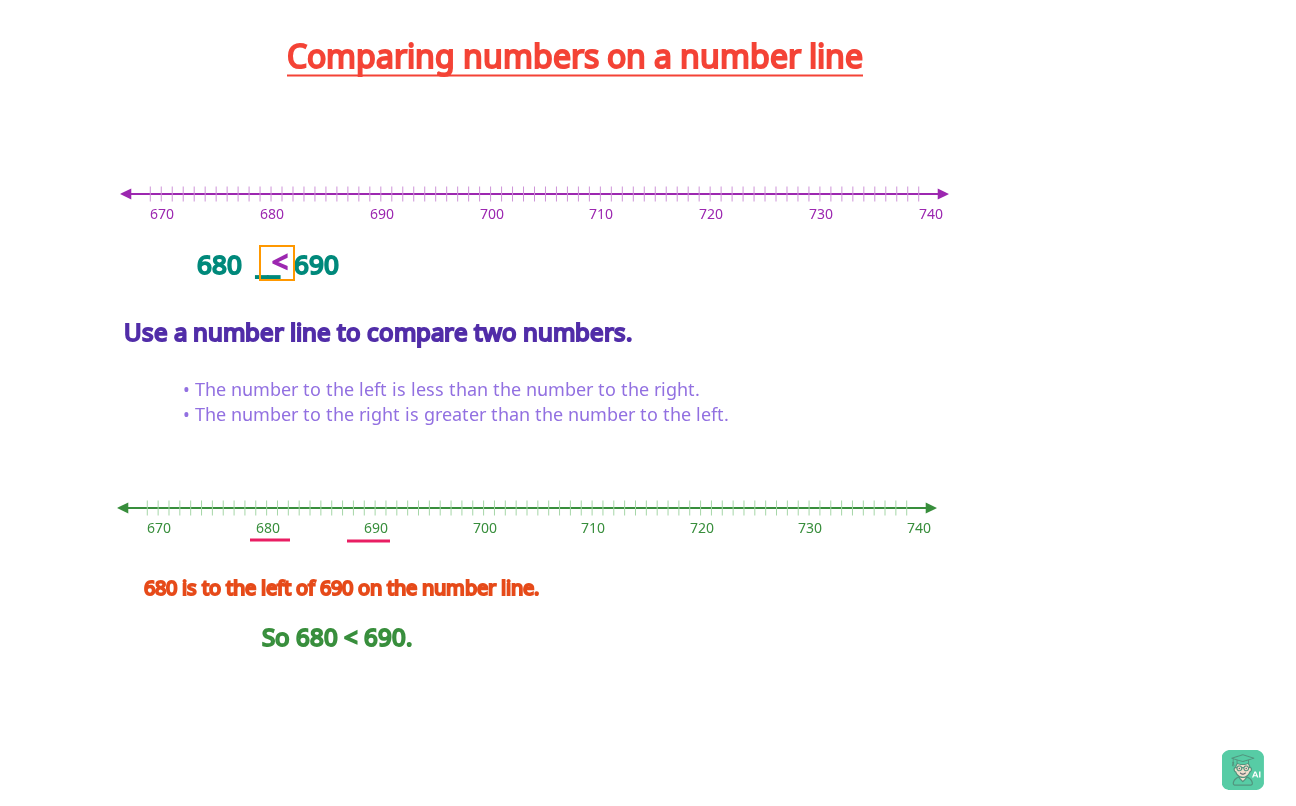
Here's the golden rule that transforms number comparison from confusing to crystal clear: On a number line, numbers to the LEFT are always LESS. Numbers to the RIGHT are always GREATER.
That's it. One simple rule that works every single time.
Let's break down how your child can apply this:
Step 1: Plot Both Numbers Find where each number belongs on the number line. For example, if comparing 34 and 52, mark both spots on the line.
Step 2: Look Left and Right Which number is further to the left? Which is further to the right? In our example, 34 is to the left of 52.
Step 3: Apply the Rule
- 34 is to the LEFT, so 34 is LESS
- 52 is to the RIGHT, so 52 is GREATER
- We write: 34 < 52 (34 is less than 52)
Why does this work? Number lines start with smaller numbers on the left and get bigger as you move right. It's like a timeline: earlier (smaller) numbers come first, and later (larger) numbers come after. Your child has probably already internalized this concept from counting, even if they don't realize it.
Pro tip for remembering < and > symbols: The "hungry alligator" always eats the bigger number! The open mouth points toward the larger number. So in 34 < 52, the alligator's mouth opens toward 52 because it's bigger and tastier.
How to Practice Number Line Comparison at Home
You don't need fancy materials to practice comparing numbers on a number line. Here are engaging activities that turn your home into a math learning zone:
1. Sidewalk Chalk Number Line Head outside and draw a giant number line on your driveway or sidewalk. Call out two numbers and have your child stand on each one (or place toys on them). Ask: "Which number is further left? Which is greater?" The physical movement helps cement the concept.
2. Masking Tape Floor Line Create an indoor number line using masking tape. Write numbers on sticky notes and have your child place them in order. Then play comparison games by picking two numbers and having them explain which is greater and why.
3. Ruler Races Use a regular ruler as a mini number line. Point to two numbers and see who can identify the greater number faster. This works great for quick practice during car rides or waiting rooms.
4. Interactive Digital Practice Online platforms like AI Teacherly offer interactive number line exercises where children drag numbers into position and see instant visual feedback. This type of practice reinforces the concept through repeated exposure in a game-like format.
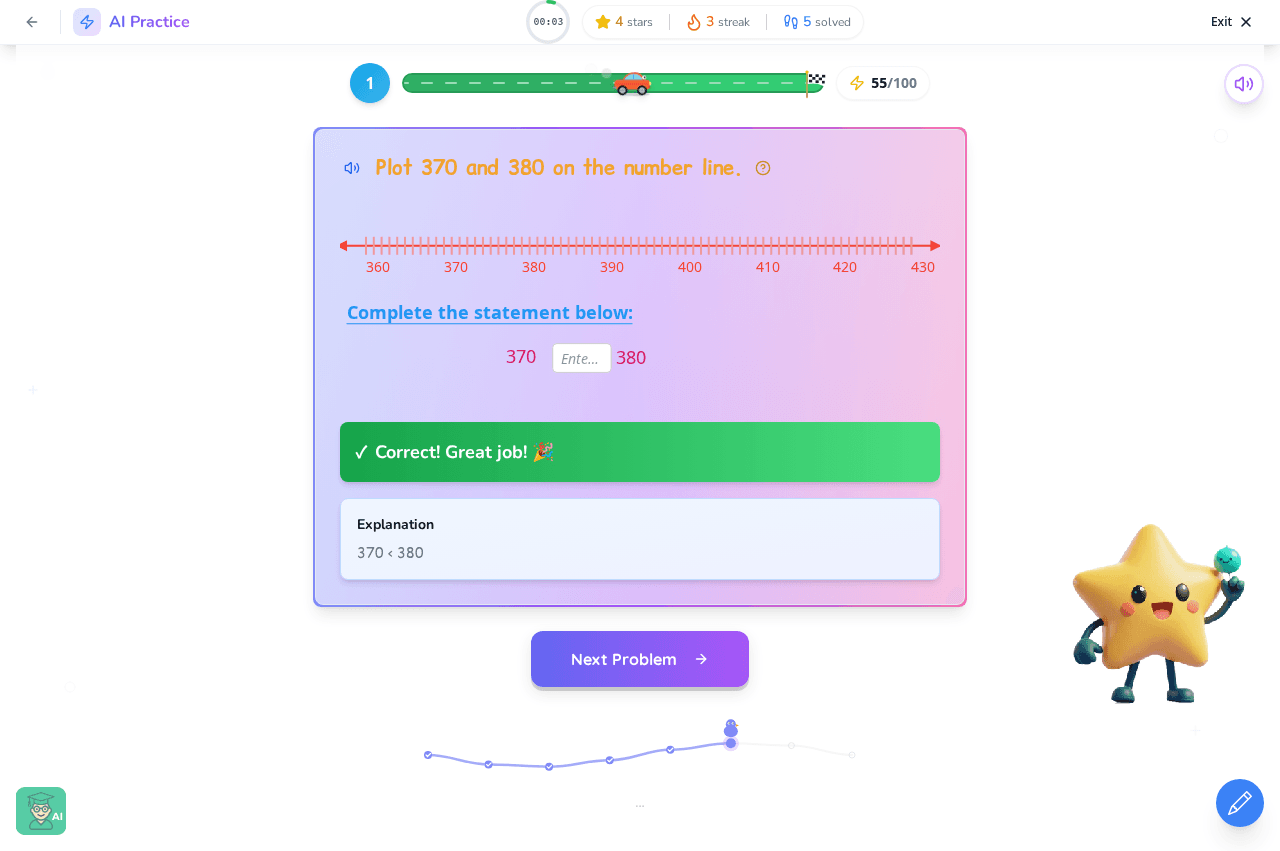
The interactive problem below shows exactly how number line practice works in a digital format that kids love:
5. "Number Detective" Game Give your child a "mystery number" that's greater than one number but less than another. For example: "I'm thinking of a number greater than 25 but less than 30." Have them use a number line to find all possibilities.
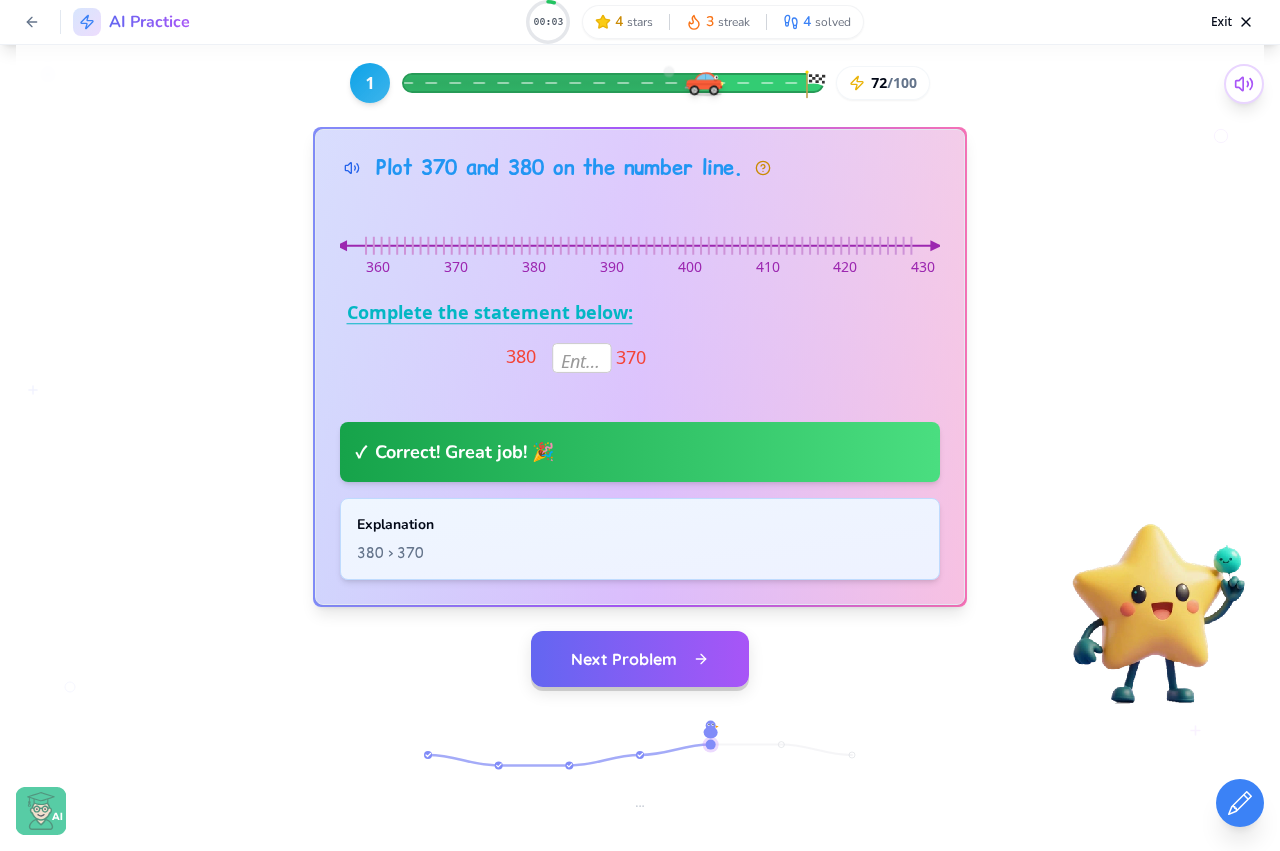
See How Interactive Number Line Practice Works
Traditional worksheets have their place, but interactive practice transforms passive learning into active engagement. When children can manipulate numbers on a digital number line, they're not just memorizing; they're building genuine understanding.
Here's what the full interactive lesson looks like on AI Teacherly:
In the Compare Numbers on a Number Line lesson designed for Grade 2, students work through carefully sequenced activities that build confidence step by step. The lesson includes:
- Visual number lines where children plot numbers by clicking or dragging
- Instant feedback that shows whether their answer is correct
- Progressive difficulty that starts simple and gradually challenges students
- Multiple problem types that keep practice fresh and engaging
Why interactive practice works better:
Immediate Correction: When a child makes a mistake, they see it right away and can try again. No waiting for a teacher or parent to check their work.
Self-Paced Learning: Some kids need three tries; others need thirty. Digital practice lets each child work at their own speed without judgment.
Engagement Factor: Let's be honest, most 2nd graders would rather tap a screen than fill in worksheets. Meeting kids where they are often means using the technology they're comfortable with.
Consistent Repetition: The key to mastering number comparison is practice, practice, practice. Interactive lessons make that repetition feel less like work and more like play.
The visual nature of these exercises directly reinforces the left-right rule, making it almost impossible to forget once it clicks.
Common Mistakes Kids Make (And How to Fix Them)
Even with the simple left-right rule, children sometimes stumble. Here are the most common mistakes and practical fixes:
Mistake #1: Confusing the < and > Symbols Many kids know which number is greater but write the symbol backward.
Fix: Reinforce the "hungry alligator" trick. The alligator's mouth (the open side of the symbol) always points to the bigger, tastier number. Practice by having your child draw alligator teeth on the symbols to remember which way they "eat."
Mistake #2: Thinking Longer Numbers Are Always Greater A child might think 99 is greater than 100 because 99 "looks bigger" with two digits close to each other.
Fix: Always bring it back to the number line. Plot both numbers and ask, "Which one is further to the right?" The visual proof overrides the visual illusion.
Mistake #3: Mixing Up "Greater" and "Less" These vocabulary words can be confusing, especially when mixed with "more" and "fewer."
Fix: Create consistent language at home. Use "greater" when talking about numbers and save "more" for objects. Draw a number line and label the left side "LESS" and the right side "GREATER" as a visual reference.
Mistake #4: Forgetting to Look at Both Numbers' Positions Some children plot one number correctly but then guess about the comparison without checking the second number's position.
Fix: Make it a two-step habit: "First, plot both numbers. Then, compare their positions." Have your child say this out loud until it becomes automatic.
Mistake #5: Rushing Without Visualizing As kids get faster, they may try to skip the number line step entirely and make careless errors.
Fix: Encourage them to "see the number line in their mind" even when one isn't provided. Ask: "Picture a number line; where would each number be?"
Key Takeaways
- The golden rule: On a number line, LEFT is always LESS, RIGHT is always GREATER
- Visual learning works because it transforms abstract concepts into something children can see and touch
- Practice at home using sidewalk chalk, masking tape, or rulers to create hands-on number lines
- The "hungry alligator" trick helps children remember which way the < and > symbols point
- Interactive digital practice provides instant feedback and keeps kids engaged longer than worksheets
- Common mistakes like symbol confusion and rushing can be fixed with consistent practice and visualization
- Number line skills are foundational for future math success, including addition, subtraction, and negative numbers
Frequently Asked Questions
How do you compare numbers on a number line?
Plot both numbers on the number line, then look at their positions. The number on the left is less, and the number on the right is greater. Use < for less than and > for greater than, with the open side pointing to the bigger number.
Why is the number line important for teaching comparison?
Number lines make abstract math visual. Children can physically see which number is bigger by looking at positions, rather than memorizing rules. This visual approach matches how young brains naturally learn best.
What does greater than and less than mean for 2nd graders?
Greater than means a number is bigger and appears further RIGHT on a number line. Less than means a number is smaller and appears further LEFT. The symbols < (less than) and > (greater than) show the relationship.
How can I help my child remember the < and > symbols?
Use the "hungry alligator" trick! The alligator's mouth (the open side) always points toward the bigger number because it wants to eat more. Drawing teeth on the symbols helps kids remember.
What are fun ways to practice number comparison at home?
Try sidewalk chalk number lines outside, masking tape lines indoors, ruler races for quick practice, or interactive online exercises. Making it physical and game-like keeps children engaged and learning.
At what age should kids understand greater than and less than?
Most children develop solid number comparison skills in 2nd grade (ages 7 to 8). It's normal for some kids to need extra practice. Consistent exposure through games and visual tools helps the concept stick.
Why does my child confuse bigger and smaller numbers?
Number comparison requires understanding place value, which is still developing in early elementary. Children may think 99 looks bigger than 100. Using number lines consistently helps them see the true relationship.
Is it normal for 2nd graders to struggle with number comparison?
Absolutely! Number comparison is a foundational skill that takes time to master. If your child struggles, it doesn't mean they're bad at math; they just need more visual practice and repetition.
Ready to make number comparison fun? Try the interactive Compare Numbers on a Number Line lesson free on AI Teacherly and watch your 2nd grader's confidence grow!