How to Teach Counting to 10: A Parent's Guide to Ten Frames
Discover how to teach counting to 10 using ten frames and everyday activities. Master kindergarten number sense with low-stress, interactive home strategies.
Introduction: Beyond 1-to-5 — The Leap to Counting to 10
Every parent of a kindergartener knows the milestone moment when their child proudly counts from one to five. Fingers shoot up, voices ring out, and math feels like an exciting game. But shortly after that initial triumph, the real challenge begins: extending that counting momentum all the way to ten. You want your child to master counting to 10 without tears or flashcard battles, but sitting still with traditional worksheets feels nearly impossible for a five-year-old.
The secret to bridging this gap is shifting away from rote memorization and moving toward visual, tactile experiences. When children can see, touch, and organize quantities, numbers stop being abstract symbols and start making intuitive sense. In this guide, we explore proven strategies, engaging ten-frame activities, and low-stress home routines that make learning kindergarten math counting to 10 an enjoyable daily adventure.
What Is a Ten Frame and Why Is It a Kindergarten Math Game-Changer?
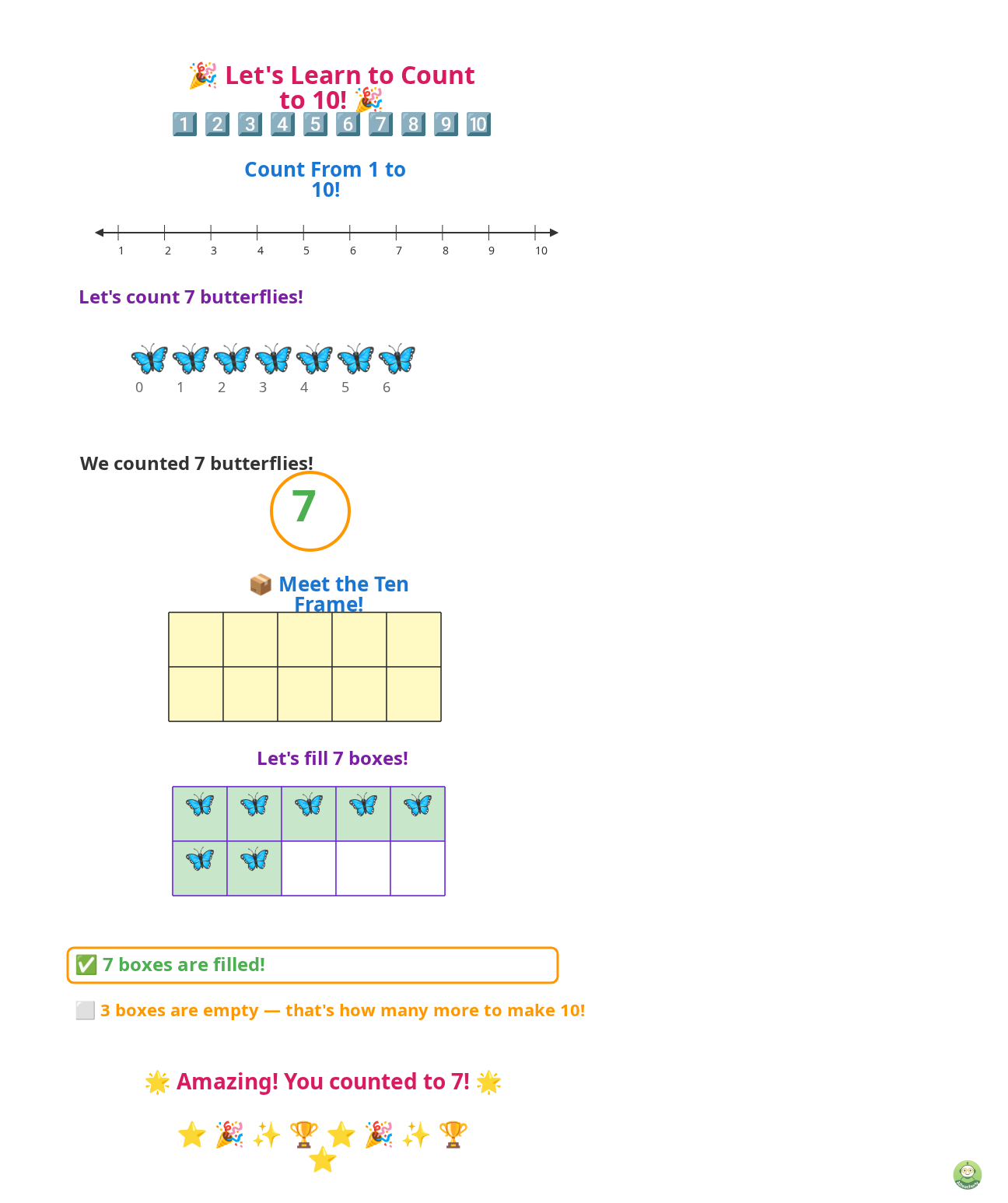
If you have recently looked at your kindergartener's math homework, you have likely encountered a grid called a ten frame. A ten frame is a simple two-by-five rectangular box used to organize counters, dots, or blocks. By arranging items inside this grid, children learn to visualize quantities instantly without having to recount every single object from scratch.
Ten frames are a kindergarten math game changer because they anchor numbers around the concept of ten. Instead of viewing numbers as isolated digits, children begin to see that 7 is made of 5 filled boxes and 2 extra boxes. This foundational spatial awareness lays the groundwork not just for counting to 10, but for future addition, subtraction, and place value concepts. When children use ten frames, math transforms from a memory test into a visual puzzle.
How to Teach One-to-One Correspondence Using Everyday Objects
Before diving into ten frames, children must master one-to-one correspondence. This is the critical skill of pairing one spoken number word with one single object. Many young children tend to point faster than they count, or they count the same toy twice because their fingers move too quickly.
You can practice this naturally during everyday routines. Ask your child to set out spoons for dinner, count buttons on a jacket, or line up toy cars on the living room floor. Remind them to touch each item gently as they say the number aloud. If they rush through, gently guide their hand to match their voice. Once one-to-one correspondence clicks, transitioning to organized counting tools becomes seamless and natural.
Step-by-Step: Filling Ten Frames and Visualizing Numbers to 10
Once your child is comfortable counting physical items in a line, it is time to introduce the ten frame structure. Drawing a simple two-row grid on paper or using manipulative mats allows children to place counters box by box. As they fill the frame from left to right, starting on the top row and moving to the bottom row, they build a consistent visual pattern for every number.
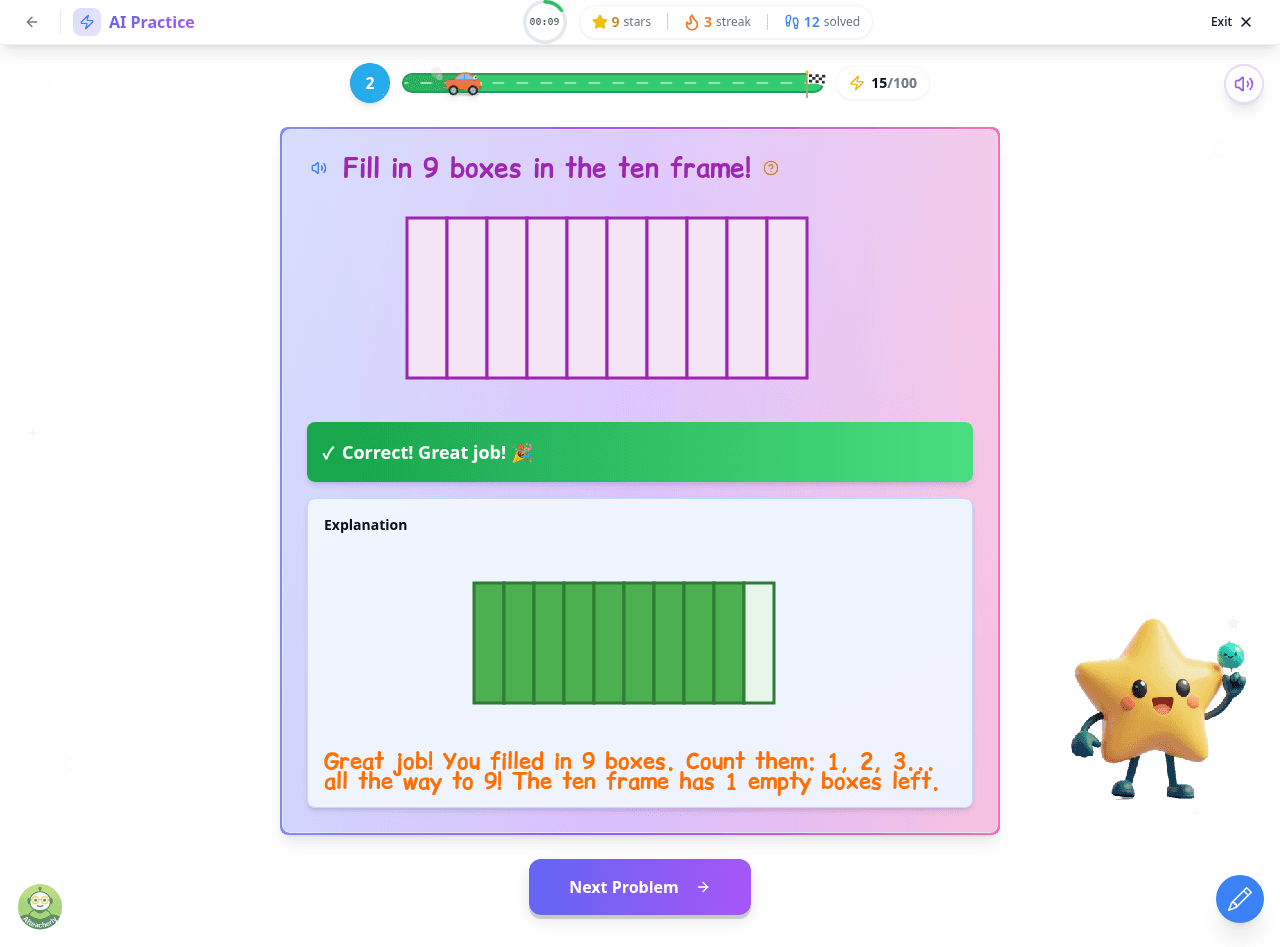
The interactive problem below shows exactly how ten frames work in practice. As children drag items into the grid, they connect quantities to visual spaces.
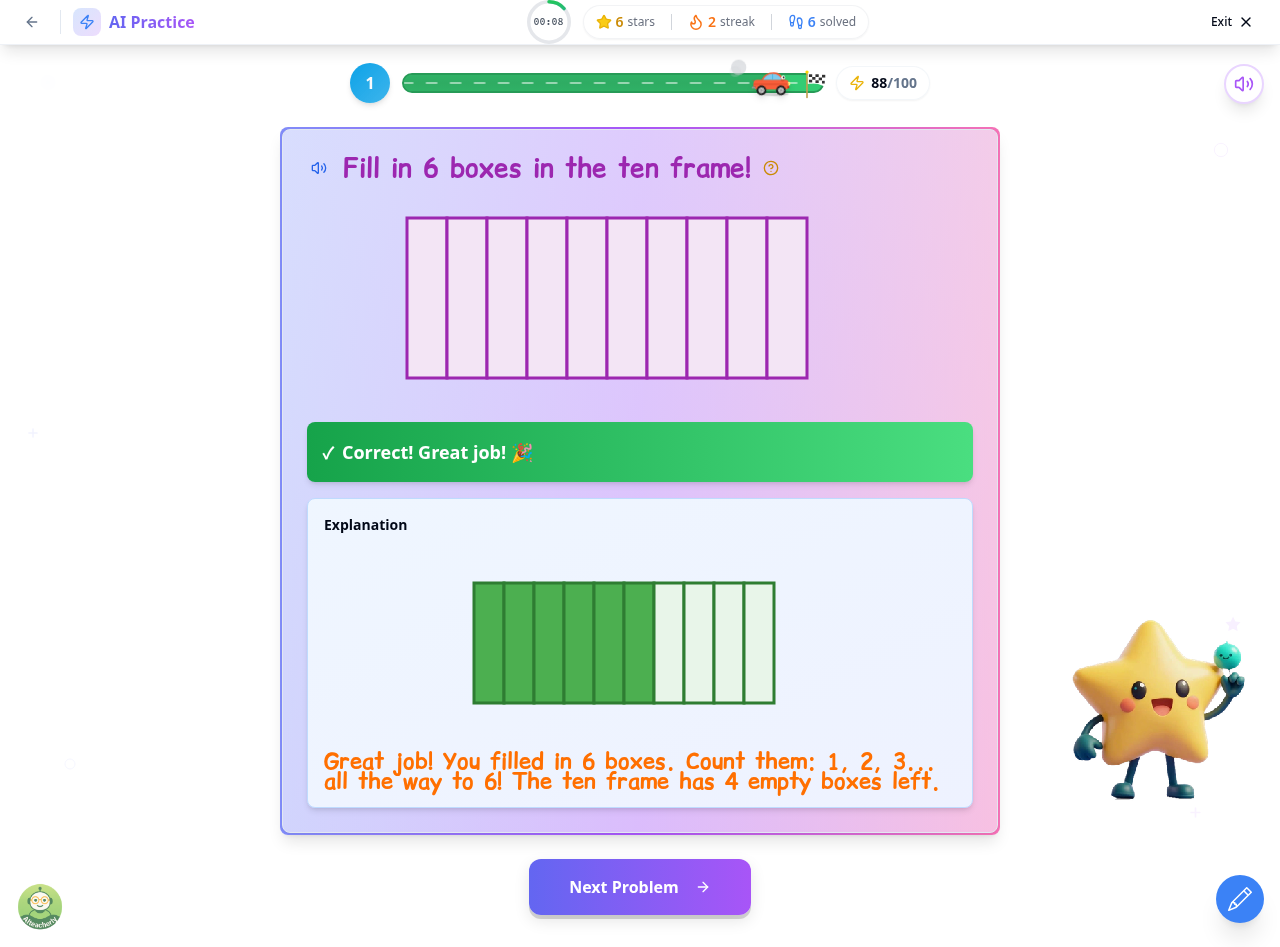
When children reach numbers 6 through 10, ten frames provide an incredible visual safety net. They can see that the top row of 5 is completely full, and the bottom row has 1, 2, 3, 4, or 5 additional counters. This visual structure removes the mystery from higher kindergarten numbers and builds genuine number confidence.
Troubleshooting: What to Do When Your Child Confuses Numerals 6 Through 10
It is entirely normal for kindergarteners to mix up numbers like six, seven, eight, nine, and ten. Because these numbers sound similar and represent larger quantities, children often skip numbers or lose track when counting scattered items. If your child struggles here, do not panic or rush to correction.
Instead, switch from counting scattered groups to organized arrays. If your child confuses 8 and 9, ask them to build both numbers using a ten frame. By looking at the empty boxes remaining in the frame, they can physically see that 8 leaves two empty spaces while 9 leaves only one. This concrete visual feedback corrects errors instantly without making the child feel discouraged.
Make Practice Fun: Interactive Learning with AI Teacherly
Bringing all these strategies together requires patience, variety, and the right interactive tools. While home activities like counting buttons and drawing ten frames are wonderful, digital learning platforms can add an extra layer of engagement that keeps children excited about math practice.
Here's what the full interactive lesson looks like on AI Teacherly:
On AI Teacherly, lessons like Learn to Count to 10 combine guided audio instructions, colorful visual manipulatives, and immediate positive feedback. Children get to interact with ten frames digitally, building numbers and solving playful counting challenges at their own pace. It removes parent-child homework friction and turns screen time into productive learning time.
Frequently Asked Questions About Kindergarten Counting
What is a ten frame and why is it used in kindergarten math?
A ten frame is a two-by-five rectangular grid used in kindergarten math to organize objects and visualize numbers up to 10. It helps children understand number composition, subitizing, and how numbers relate to the anchor number ten.
How can I teach my kindergartener to count to 10 at home?
You can teach counting to 10 at home by pairing physical objects like blocks or buttons with ten frames, practicing one-to-one correspondence, and using interactive online lessons that make visual counting fun and engaging.
At what age should children be able to count up to 10 accurately?
Most children develop solid one-to-one counting skills for numbers 1 through 10 between ages 5 and 6, often starting with rote counting earlier and connecting quantities to written numerals during kindergarten.
Are finger counting and physical objects better than flashcards?
Both are valuable, but physical objects and finger counting provide essential tactile feedback. Combining hands-on object manipulation with structured visual tools like ten frames builds stronger conceptual number sense than flashcards alone.
Why does my child confuse numerals 6 through 10?
Number confusion between 6 and 10 is common because quantities look similar in abstract form. Using ten frames helps by showing empty spaces, so children see that 8 has two empty boxes while 10 is completely full.
How can I help my child understand that the last number counted represents the total amount?
To help your child understand total quantity, ask them 'How many do you have in total?' right after they count a group. If they recount from the beginning, gently guide them to understand that the final number spoken represents the whole set.
Key Takeaways
- Counting to 10 requires building one-to-one correspondence between spoken numbers and physical objects.
- Ten frames provide a powerful visual anchor that helps kindergarteners understand numbers in relation to ten.
- Short, consistent daily practice sessions of 15 to 20 minutes prevent frustration and build long-term math confidence.
- Connecting numerals 6 through 10 to visual quantities clears up common number confusion.
- Interactive digital platforms like AI Teacherly combine tactile learning with guided support for stress free home practice.
Frequently Asked Questions
What is a ten frame and why is it used in kindergarten math?
A ten frame is a two-by-five rectangular grid used in kindergarten math to organize objects and visualize numbers up to 10. It helps children understand number composition, subitizing, and how numbers relate to the anchor number ten.
How can I teach my kindergartener to count to 10 at home?
You can teach counting to 10 at home by pairing physical objects like blocks or buttons with ten frames, practicing one-to-one correspondence, and using interactive online lessons that make visual counting fun and engaging.
At what age should children be able to count up to 10 accurately?
Most children develop solid one-to-one counting skills for numbers 1 through 10 between ages 5 and 6, often starting with rote counting earlier and connecting quantities to written numerals during kindergarten.
Are finger counting and physical objects better than flashcards?
Both are valuable, but physical objects and finger counting provide essential tactile feedback. Combining hands-on object manipulation with structured visual tools like ten frames builds stronger conceptual number sense than flashcards alone.
Why does my child confuse numerals 6 through 10?
Number confusion between 6 and 10 is common because quantities look similar in abstract form. Using ten frames helps by showing empty spaces, so children see that 8 has two empty boxes while 10 is completely full.
How can I help my child understand that the last number counted represents the total amount?
To help your child understand total quantity, ask them 'How many do you have in total?' right after they count a group. If they recount from the beginning, gently guide them to understand that the final number spoken represents the whole set.
Ready to make early math engaging and frustration free? Explore interactive kindergarten math lessons on AI Teacherly today!