How to Teach Kindergarten Addition at Home: A Parent's Guide to Simple Sums
Discover simple, playful ways to teach kindergarten addition at home. Learn how to introduce grouping, plus signs, and basic sums using everyday objects and interactive lessons.
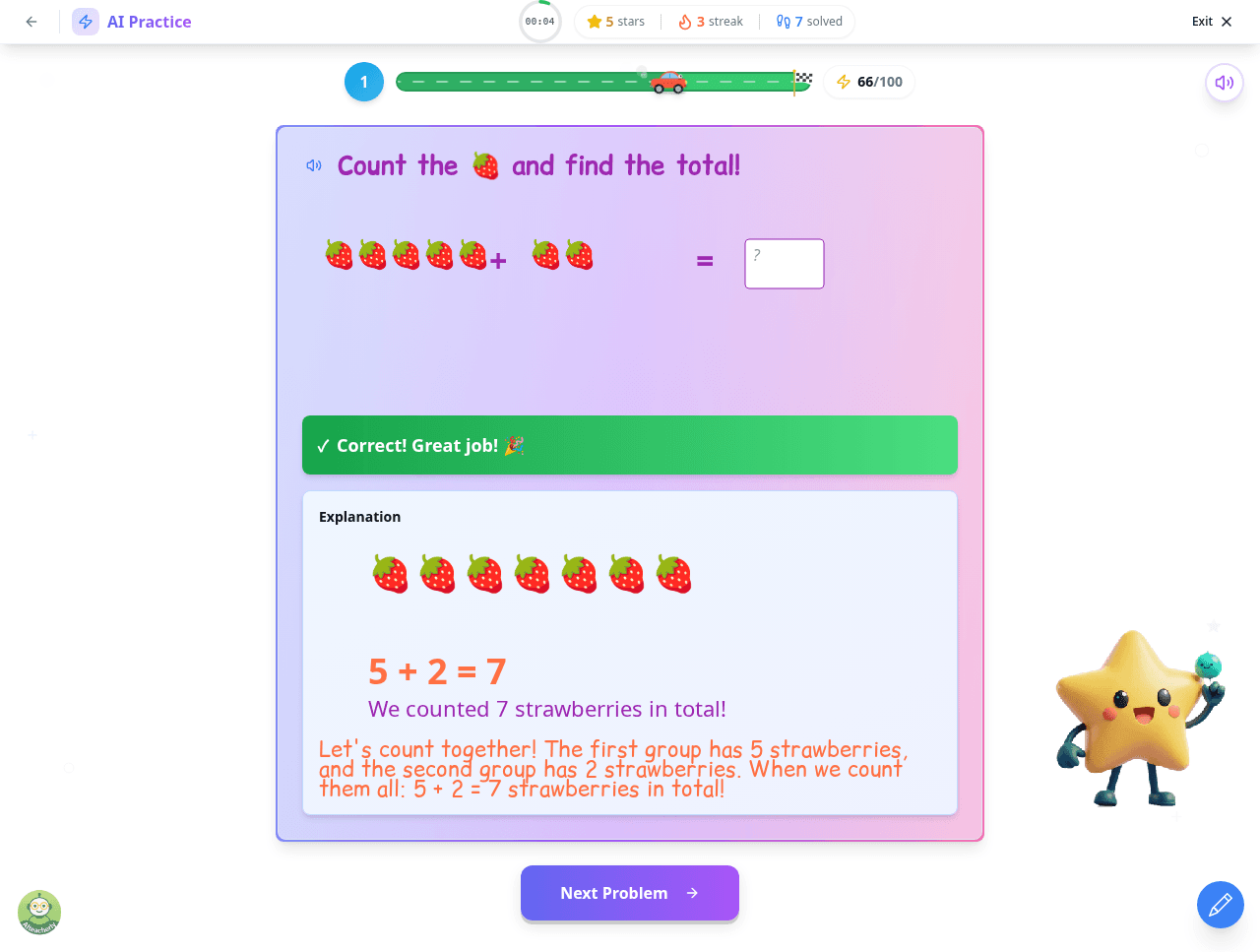
Introduction: Making Math Fun for Kindergarteners
Entering kindergarten is an exciting milestone filled with new routines, ABCs, and counting. For many families, math suddenly steps into the spotlight. When parents wonder how to teach kindergarten addition, the instinct is often to pull out flashcards or printable worksheets. However, five-year-olds learn best through exploration, physical movement, and play. Transforming abstract numbers into tangible experiences helps young children build a rock-solid foundation for future mathematics without tears or frustration.
When you shift the focus from rote memorization to playful exploration, children begin to see math all around them. Whether counting apples at the grocery store or gathering building blocks in the living room, early math should feel natural and joyful. Understanding how to introduce addition gently at this stage sets the stage for lifelong mathematical confidence.
What Does Addition Actually Mean for 5-Year-Olds?
Before diving into numbers and equations, it helps to understand what addition actually means for a young child. In kindergarten, addition is not about memorizing that three plus two equals five. Instead, it is about understanding the concept of putting things together.
When children see two small groups of toys combined into one larger group, they witness the core principle of addition. They learn that when we add, our total number gets bigger. This conceptual understanding is far more valuable than procedural trickery. By framing addition as a story of gathering and combining, parents can demystify math and make it approachable for every 5-year-old.
Step 1: Start with Counting and Grouping Objects
The best math manipulatives are already scattered across your child's bedroom. Toys, buttons, cereal pieces, and colorful blocks serve as powerful learning tools. To begin, place two small piles of objects in front of your child. For example, put two toy cars in one pile and three toy cars in another pile.
Ask your child to count the cars in the first pile, then count the cars in the second pile. Next, guide them to push both piles together into one big group and count the new total. This hands-on grouping method bridges the gap between counting and adding. When children physically move objects, their brains create strong visual connections that make mathematical concepts stick.
Step 2: Introduce the Plus (+) and Equals (=) Signs Visually
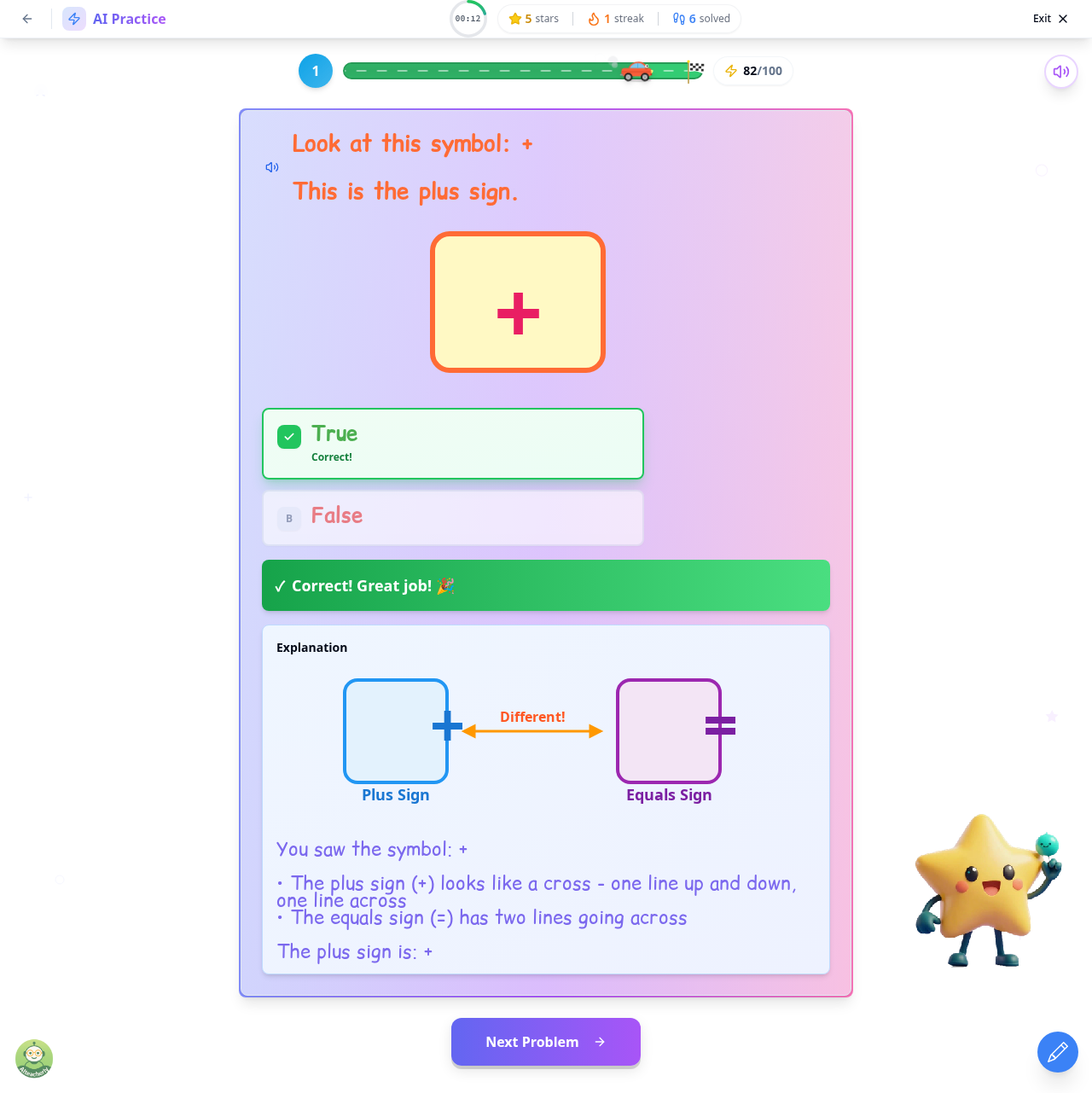
Once your child is comfortable combining physical groups, it is time to introduce the mathematical symbols. Abstract signs like plus (+) and equals (=) can seem mysterious to a kindergartener. Instead of defining them formally, use storytelling and hand gestures.
Explain that the plus sign is a friendly helper that tells us to put two groups together. The equals sign acts like a bridge that shows us the final answer.
The true-false problem below shows exactly how math symbols and visual counts work together in early kindergarten lessons.
3 Fun Ways to Practice Addition at Home Without Worksheets
Keeping kindergarten math practice engaging requires variety. Instead of relying solely on paper, try these three playful strategies at home:
- Snack Math: Use crackers or fruit slices. If your child has two apple slices and you give them two more, ask them how many they have before they eat!
- Step Counting: While walking up the stairs, count each step out loud. Group the steps in sets of twos or threes.
- Story Problems: Create simple stories about animals or favorite characters joining games to make numbers come alive.
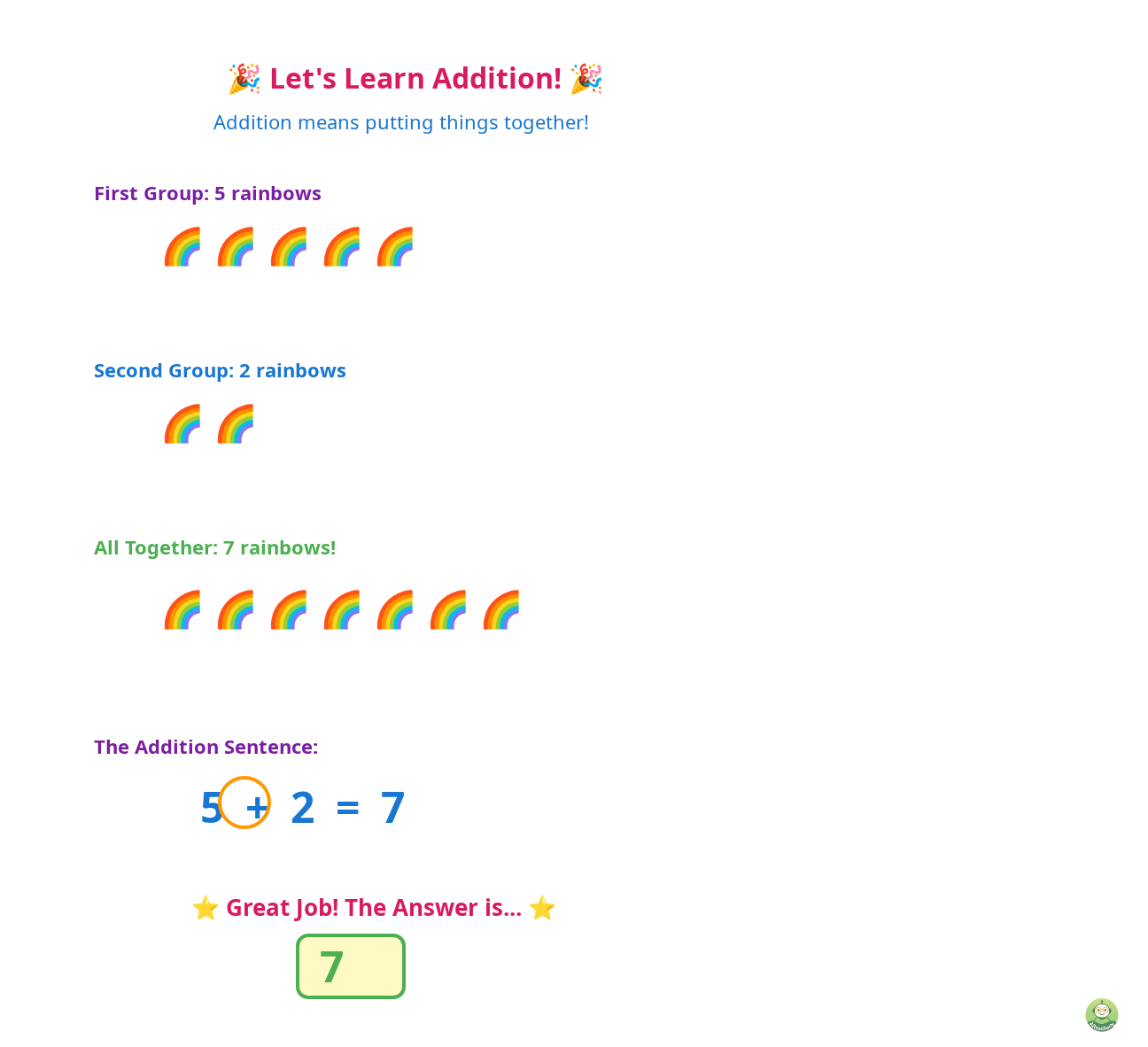
Here's what the full interactive lesson looks like on AI Teacherly:
How AI-Powered Lessons Can Support Early Math Skills
Interactive digital platforms provide a wonderful complement to hands-on play. In lessons like Introduction to Addition on AI Teacherly, kindergarteners experience guided visual learning that reinforces number combinations through cheerful animations and immediate feedback.
Digital tools help children practice at their own pace without the pressure of a traditional classroom setting. By combining physical object counting with interactive digital practice, parents can create a balanced learning environment that builds both competence and enthusiasm for math.
Key Takeaways
- Define addition simply as combining two separate groups into one larger total sum
- Use physical household items like toys, snacks, and blocks as tactile math manipulatives
- Introduce mathematical symbols (+ and =) through storytelling and hand motions rather than rote drills
- Keep practice sessions brief, engaging, and play-oriented to build lifelong math confidence
- Leverage interactive digital lessons to reinforce visual number sense safely at home
Frequently Asked Questions
What does addition mean in kindergarten?
Addition in kindergarten means combining two groups of physical objects to find out how many there are in total. It is taught through tangible grouping and counting rather than abstract memorization.
How do I introduce addition to my 5-year-old?
Start with everyday objects like toys, fruit, or blocks. Group two small piles together, count them individually, and then count the combined pile to show how the total sum grows larger.
When do kids learn plus and equals signs?
Children typically encounter basic addition concepts in kindergarten, usually starting with sums up to 5 and progressing to sums within 10 using pictures, fingers, and physical objects.
How to explain plus and equals signs to a kindergartener?
Explain the plus sign as putting two groups together and the equals sign as showing what the total looks like. Storytelling and hand gestures make these symbols much easier for young children to grasp.
Are manipulatives better than worksheets for teaching early math?
Yes, physical manipulatives are essential for 5-year-olds because math is abstract. Touching and moving real objects helps build neural pathways for number sense long before paper worksheets are introduced.
What should I do if my child gets frustrated counting objects?
Keep practice sessions short, fun, and pressure-free. Switch to game-based digital lessons like those on AI Teacherly to maintain engagement and celebrate small wins.
Ready to make early math engaging and fun? Explore the interactive 'Introduction to Addition' lesson and hundreds of other kindergarten activities free on AI Teacherly!