Mastering 1st Grade Place Value: A Parent’s Guide to Tens and Ones
Discover stress-free ways to teach place value to your first grader. Learn how base-ten blocks, expanded form, and interactive practice make two-digit numbers click.
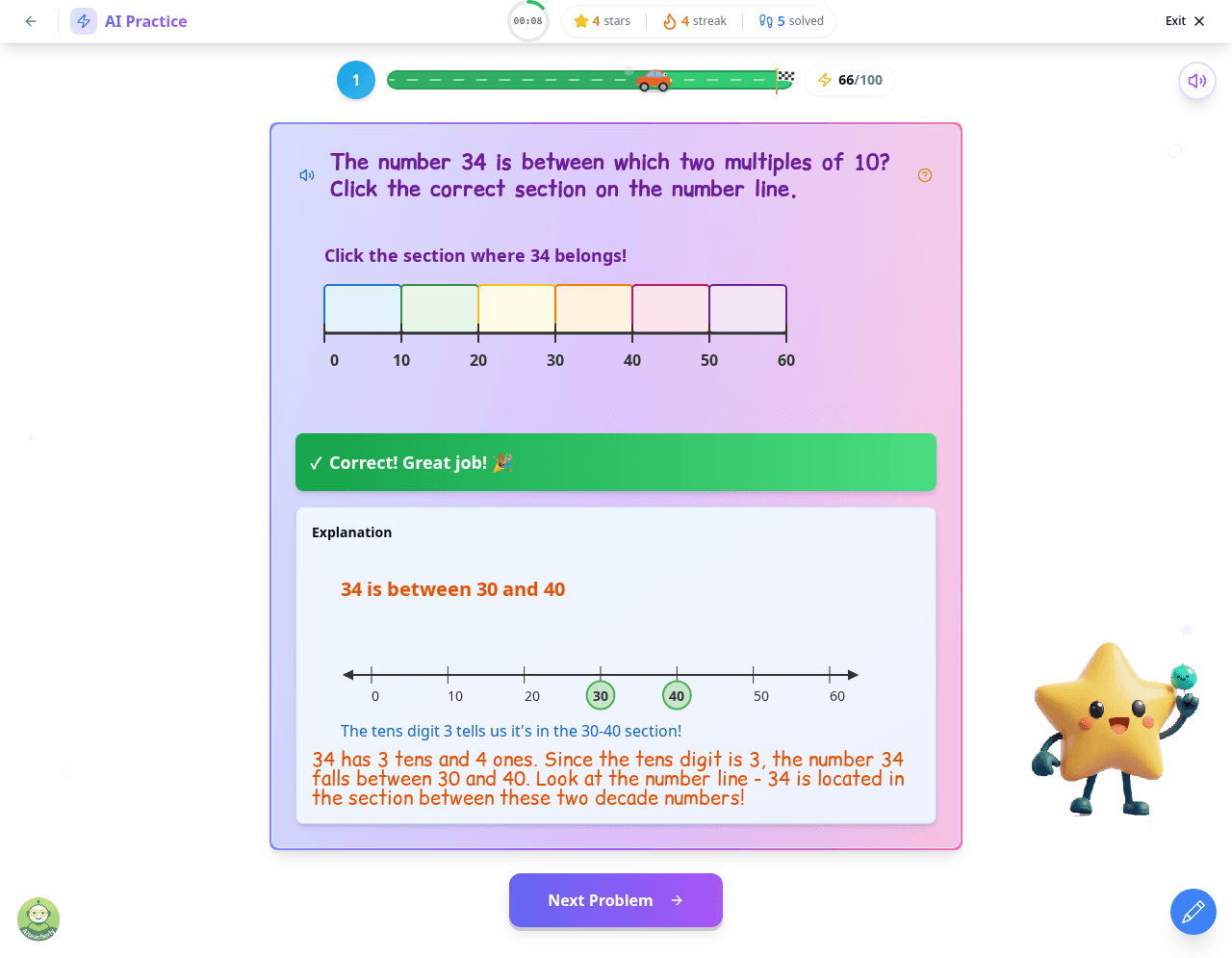
Introduction: Unlocking the Secret of Two-Digit Numbers
When children first encounter two-digit numbers in first grade, math suddenly stops being simple counting and starts becoming a puzzle of position and value. Suddenly, the number 34 is no longer just thirty-four separate objects, but a structured combination of tens and ones. For many parents, guiding children through this transition can feel daunting, especially when modern math classrooms introduce vocabulary like expanded form, base-ten rods, and regrouping.
The secret to helping your child succeed is shifting away from rote memorization and toward visual understanding. When children can physically see that a two-digit number is built from bundles of ten and leftover ones, numbers stop being mysterious symbols and start making intuitive sense. Throughout this guide, we will explore practical, stress-free strategies to help you teach place value at home, turning frustration into confidence.
What Are Tens and Ones in 1st Grade Math?
At its core, place value is the system where the value of a digit depends on its position in a number. In first grade mathematics, children learn that every two-digit number has two distinct parts: the tens place on the left and the ones place on the right.
To make this concept concrete, educators rely on base-ten blocks. A single unit cube represents one, while a long vertical rod made of ten connected cubes represents a ten. When a child looks at the number 25, they learn to visualize it not as a single random amount, but as 2 long rods of ten and 5 individual unit cubes. This fundamental realization transforms how children approach addition, subtraction, and number comparison. By breaking numbers into their component parts, children build the mental flexibility required for advanced arithmetic in later grades.
How Can I Explain Place Value and Expanded Form at Home?
Teaching place value and expanded form at home does not require expensive classroom equipment or teacher training. The most effective approach is connecting math directly to items your child already loves and uses every day.
Start by gathering small household items such as LEGO bricks, dried beans, or Popsicle sticks. Have your child count out ten items and rubber-band them together to create a homemade ten bundle. When you write down a number like 43, ask your child to build it using four bundles of ten sticks and three loose sticks. Next, introduce expanded form by writing out the addition sentence: 40 plus 3 equals 43. Saying the number aloud slowly helps reinforce this connection, because forty-three literally sounds like forty and three.
Why Regrouping Matters: The Magic of Trading Tens and Ones
One of the trickiest milestones in early mathematics is understanding regrouping, often referred to as trading. Children often wonder why ten loose items suddenly become one solid rod, or vice versa.
The easiest way to explain this is through a real-world money analogy. Imagine your child has ten pennies in their pocket. Those ten pennies are heavy and take up a lot of space, just like ten individual unit cubes. When you visit the bank, you can trade those ten pennies for a single shiny dime. The dime is smaller and easier to carry, but it holds the exact same value. In math, trading ten ones for one ten rod operates on this exact same principle. When children master this mental trade, subtraction and addition with two-digit numbers become remarkably straightforward.
3 Hands-On Activities to Practice Place Value Without Worksheets
Worksheets can sometimes make young learners feel restricted or anxious. Incorporating hands-on activities into your daily routine keeps learning playful and engaging. Here are three favorite ways to practice place value without traditional paper exercises:
- The Dice Builder Game: Roll two dice to generate a two-digit number. Have your child race to build that number using household objects like pennies and dimes or bundled cotton swabs.
- Secret Number Hunt: Write down a two-digit number on a sticky note, but split it into expanded clues around the room, such as "Find the card for 30" and "Find the card for 7" to discover the secret number 37.
- Chalkboard Place Value: Take learning outdoors with sidewalk chalk. Draw giant base-ten rods and unit cubes on the pavement and ask your child to hop through the correct number of tens and ones.
The interactive problem below shows exactly how place value and base-ten representations work in practice.
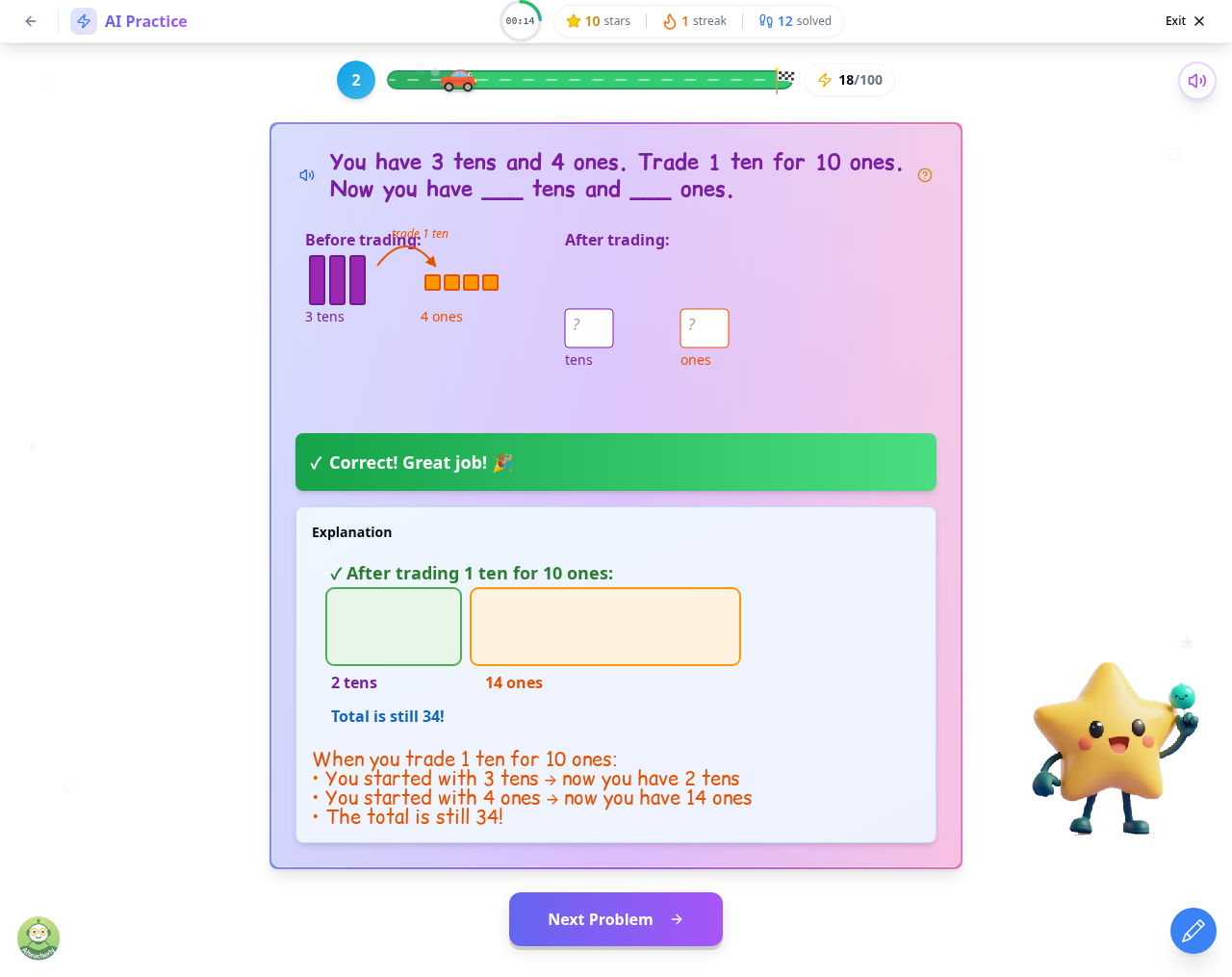
See How Interactive Learning Makes Math Click on AI Teacherly
While hands-on games with household items are fantastic, digital tools can take a child's understanding to the next level by providing instant feedback and interactive visuals. Platforms like AI Teacherly are designed specifically to bridge the gap between abstract math concepts and concrete visual learning for young students.
In lessons such as Build and Break Apart Two-Digit Numbers, students do not just passively look at numbers. They actively drag base-ten blocks, build tens and ones on digital canvases, and solve playful challenges tailored to their exact pace. This gamified approach keeps engagement high and eliminates homework battles.
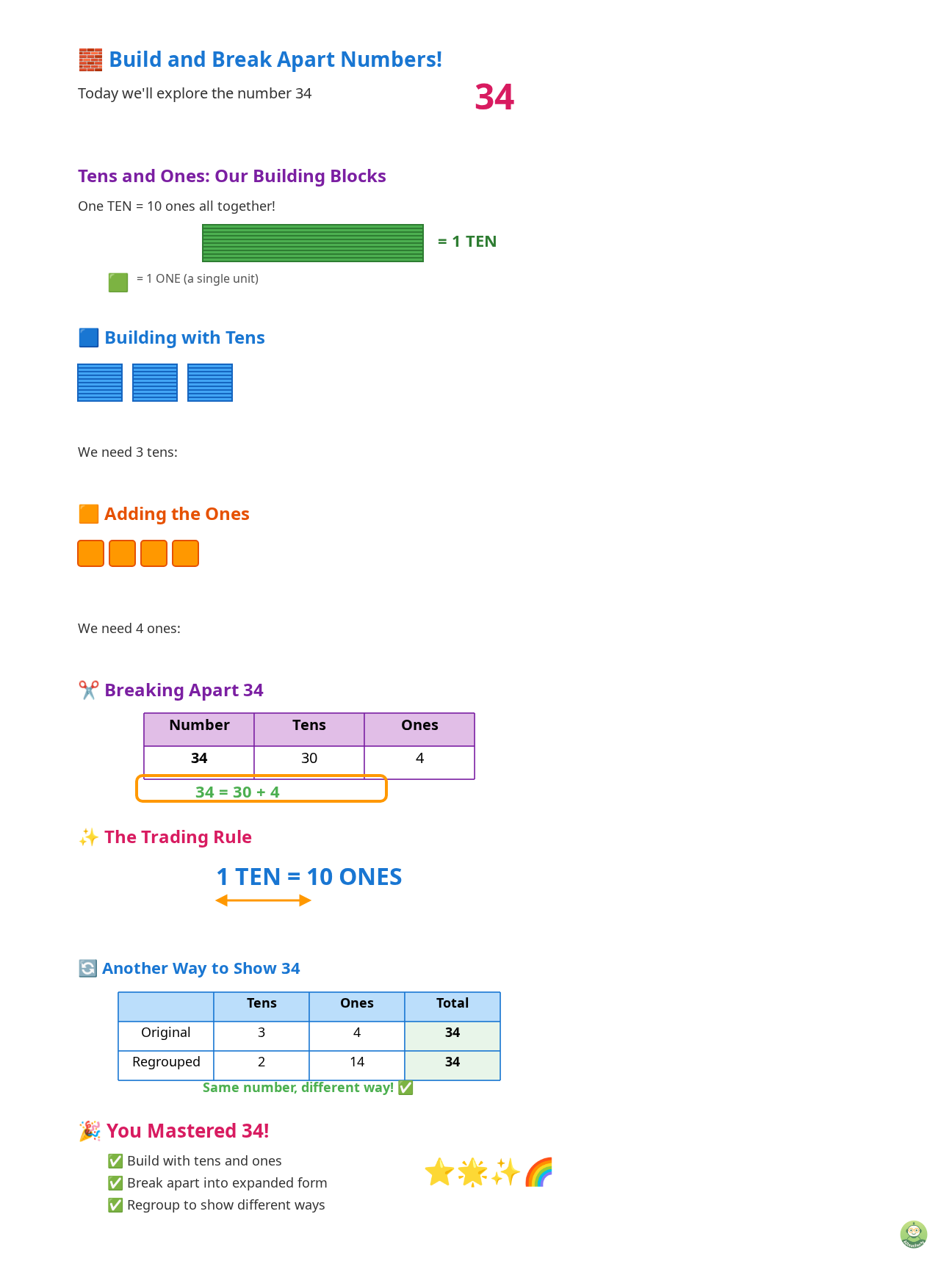
Here's what the full interactive lesson looks like on AI Teacherly:
Frequently Asked Questions About 1st Grade Place Value
Frequently Asked Questions
What are tens and ones in 1st grade math?
Tens and ones are the building blocks of our number system. In 1st grade math, tens represent groups of ten items bundled together (like a rod of 10 blocks), while ones represent individual single items (like separate unit cubes). Understanding this helps children see that the number 34 is not just a random digit, but 3 tens and 4 ones.
How can I help my 1st grader understand place value at home?
The best way to teach place value at home is through everyday objects like dimes and pennies, LEGO bricks, or pasta pieces grouped in bundles of ten. By physically grouping items into bundles of ten and leaving leftovers as ones, children grasp the concrete reality behind abstract digits.
Why does my child get confused when learning two-digit numbers?
Children often get confused because digits change their value based on position. A 3 in the ones place is just three, but a 3 in the tens place is thirty. Using color-coded cards or physical base-ten rods helps visual learners separate the digit's face value from its actual place value.
What is expanded form and how do I teach it?
Expanded form is writing a number as the sum of its tens and ones. For example, the number 42 in expanded form is 40 plus 2. You teach it by having your child say the number slowly: forty... two, which naturally sounds like 40 and 2.
Are visual base-ten blocks better than math worksheets for young children?
Visual base-ten blocks are vastly superior for young children because they represent true proportional quantities. A ten rod is literally ten times larger than a unit cube, allowing children to physically feel and see the difference in magnitude that worksheets fail to convey.
How do I explain regrouping or trading without confusing them?
Regrouping or trading happens when you have ten individual ones and exchange them for one solid ten rod. You can explain it by telling your child that when our pockets get too heavy with ten single pennies, we trade them in for a single shiny dime.
Key Takeaways
- Place value splits two-digit numbers into tens (groups of 10) and ones (single units).
- Physical objects like LEGO bricks or bundled straws make abstract numbers tangible for young learners.
- Expanded form breaks numbers down into addition sentences, such as 34 equaling 30 plus 4.
- Interactive digital tools help children practice regrouping and trading without paper frustration.
- Consistency and short 15-minute practice sessions build long-term mathematical confidence.
Frequently Asked Questions
What are tens and ones in 1st grade math?
Tens and ones are the building blocks of our number system. In 1st grade math, tens represent groups of ten items bundled together (like a rod of 10 blocks), while ones represent individual single items (like separate unit cubes). Understanding this helps children see that the number 34 is not just a random digit, but 3 tens and 4 ones.
How can I help my 1st grader understand place value at home?
The best way to teach place value at home is through everyday objects like dimes and pennies, LEGO bricks, or pasta pieces grouped in bundles of ten. By physically grouping items into bundles of ten and leaving leftovers as ones, children grasp the concrete reality behind abstract digits.
Why does my child get confused when learning two-digit numbers?
Children often get confused because digits change their value based on position. A 3 in the ones place is just three, but a 3 in the tens place is thirty. Using color-coded cards or physical base-ten rods helps visual learners separate the digit's face value from its actual place value.
What is expanded form and how do I teach it?
Expanded form is writing a number as the sum of its tens and ones. For example, the number 42 in expanded form is 40 plus 2. You teach it by having your child say the number slowly: forty... two, which naturally sounds like 40 and 2.
Are visual base-ten blocks better than math worksheets for young children?
Visual base-ten blocks are vastly superior for young children because they represent true proportional quantities. A ten rod is literally ten times larger than a unit cube, allowing children to physically feel and see the difference in magnitude that worksheets fail to convey.
How do I explain regrouping or trading without confusing them?
Regrouping or trading happens when you have ten individual ones and exchange them for one solid ten rod. You can explain it by telling your child that when our pockets get too heavy with ten single pennies, we trade them in for a single shiny dime.
Ready to transform math time into your child's favorite part of the day? Try the Build and Break Apart Two-Digit Numbers lesson free on AI Teacherly!