Mastering Place Value: How to Teach Tens and Ones to Your 2nd Grader
Master second-grade place value with our parent guide. Learn how to teach tens and ones, use base-10 blocks effectively, and build math confidence at home.
Introduction: Why Place Value is the Foundation of 2nd Grade Math
Second grade math introduces foundational concepts that shape a child's numerical intuition for years to come. Among these, mastering place value is arguably the most critical stepping stone. When children truly grasp that the position of a digit determines its value, numbers stop being arbitrary symbols and start making logical sense. Parents often notice homework frustration around this time because math shifts from simple counting to abstract grouping. Fortunately, when you teach place value tens and ones using visual models, abstract numbers transform into concrete concepts that children can easily visualize and master. This guide walks you through proven strategies, common pitfalls, and interactive tools to make second grade math an enjoyable experience for both you and your child.
What Are Place Value Models and Tens and Ones?
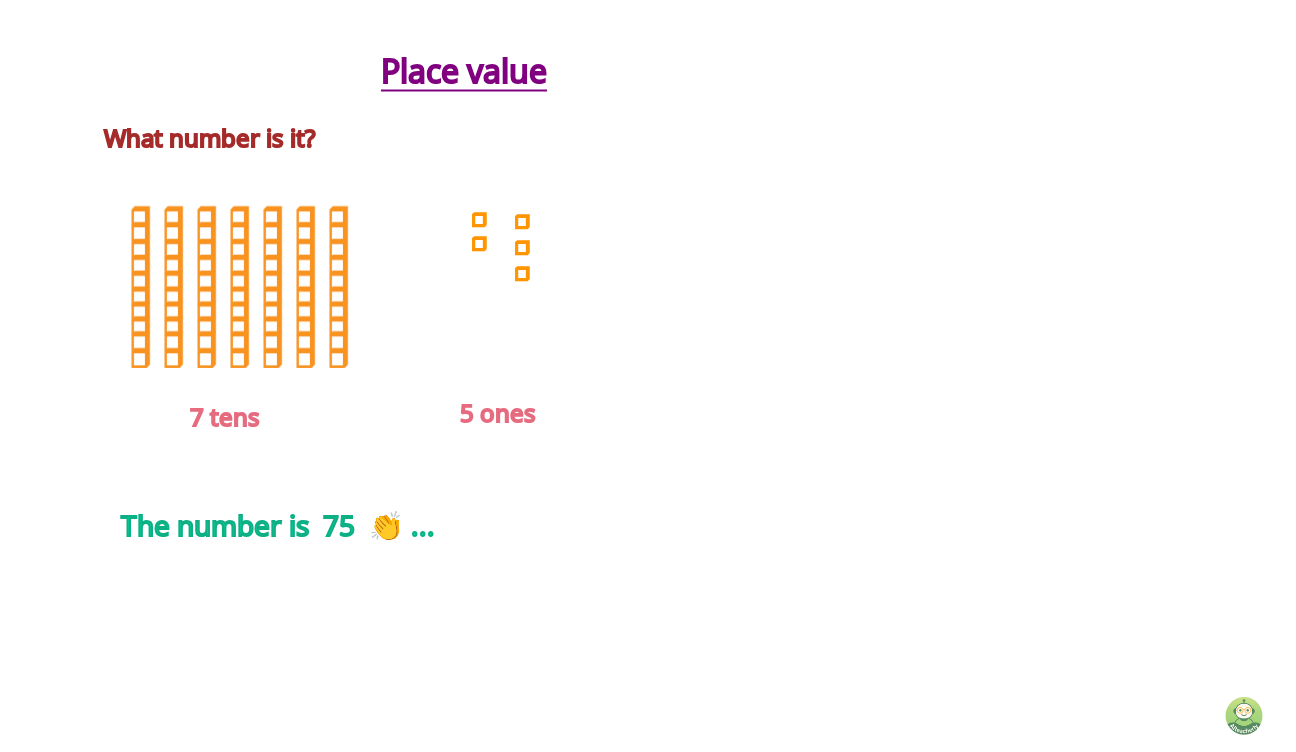
At its core, place value is the system where the value of a digit depends on its position in a number. For second-grade students, this means understanding that in the number 47, the digit 4 is not just a four; it represents four tens, or forty. The digit 7 represents seven ones. Place value models are visual representations designed to show these quantities clearly. The standard tools used in classrooms are base-10 blocks, which feature long rods representing ten units and small individual squares representing single units. When children see ten single cubes physically snap or align into a single ten-rod, the abstract concept of tens and ones becomes tangible. This visual approach prevents future math anxiety and prepares students for multi-digit addition and subtraction.
How to Explain Base-10 Blocks to Your Second Grader
Introducing base-10 blocks at home can turn a confusing math worksheet into an engaging hands-on activity. The secret is helping your child understand the relationship between the pieces. Explain that the small unit cubes represent one, while the tall rod represents a bundle of ten. Ask your child to count out ten individual cubes and line them up side-by-side with a ten-rod to prove that they are equal in quantity. Once they establish this equivalence, they will stop trying to count every single square on a rod and instead start counting by tens. This shift from counting by ones to skip-counting by tens is a major milestone in second-grade mathematical development.
Step-by-Step Guide to Counting Tens and Ones at Home
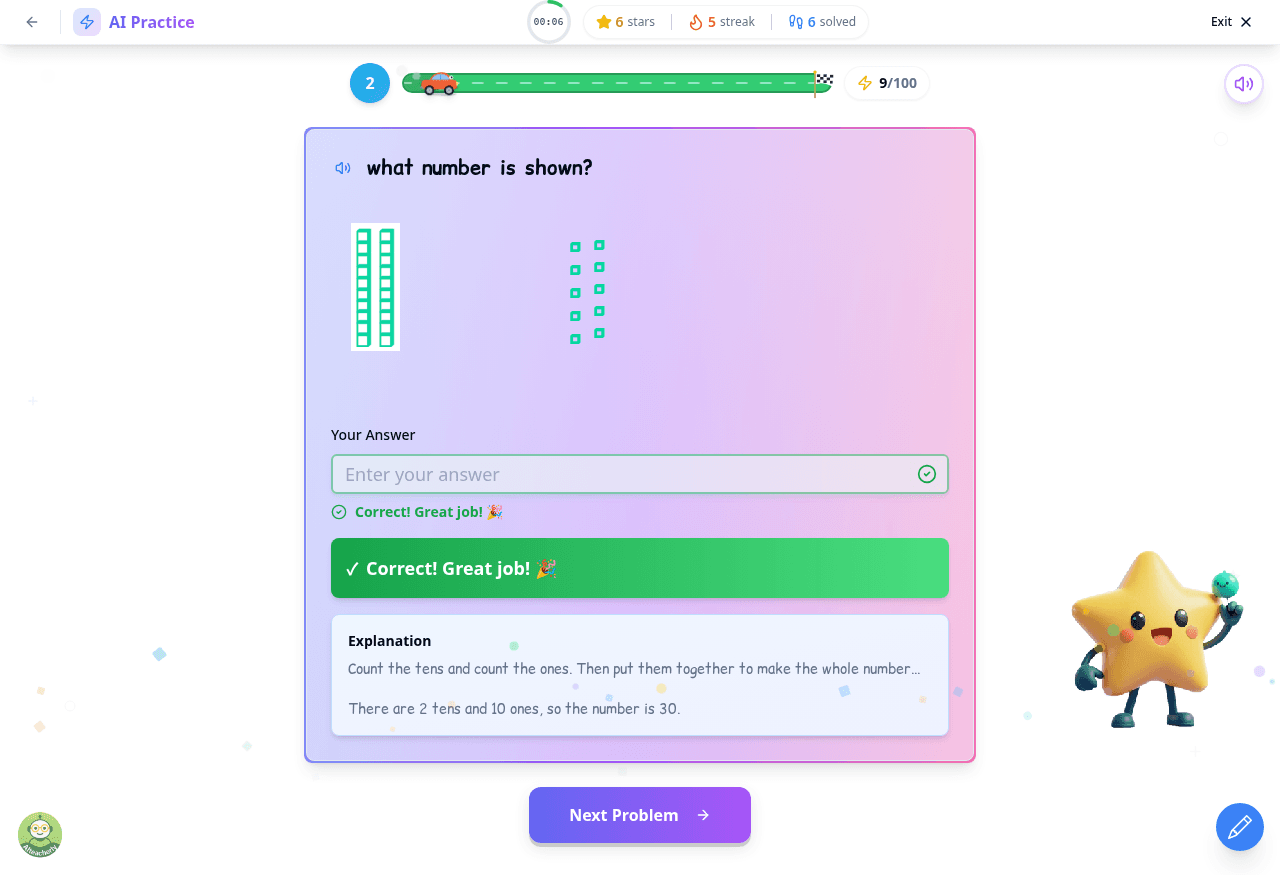
Counting base-10 models requires a specific sequence to prevent errors and build strong habits. Children should always count the tens rods first before counting the individual ones cubes. The beginner-level visual problem below shows a standard configuration of rods and cubes designed to test this exact skill.
The interactive problem below shows exactly how place value counting works in practice.
When reviewing a problem like this with your child, prompt them to point to the rods first. Have them count aloud: 'One ten, two tens, three tens' (representing thirty). Then, have them transition to the ones cubes: 'Thirty-one, thirty-two, thirty-three.' This sequence reinforces the hierarchical structure of our number system, ensuring students write the tens digit in the correct place value column every single time.
3 Interactive Ways to Practice Place Value Without Worksheets
You do not need specialized plastic classroom blocks to reinforce these lessons around the house. Everyday household items provide fantastic opportunities for tactile math practice. First, try bundling ten craft sticks or pencils with rubber bands to make homemade tens rods, using loose beans or coins for ones cubes. Second, use kitchen ingredients like dry spaghetti noodles as tens and loose macaroni pieces as ones during cooking time. Third, draw simple place-value charts on a whiteboard where your child can physically place counters in the tens and ones columns based on numbers you call out. These low-pressure, playful activities cement second-grade math standards without triggering homework tears.
Common Mistakes 2nd Graders Make with Place Value (And How to Fix Them)
Even with great visual models, second graders frequently encounter predictable stumbling blocks. The most common error is digit reversal, where a child writes 47 as 74 because they hear the number forty-seven and write the sounds in reverse order. Another frequent pitfall is counting tens rods as single units, treating a group of ten as if it were worth only one point. To fix these issues, gently redirect your child's focus back to the physical size of the objects. Ask questions like, 'Is this a tiny cube or a long ten-rod?' and 'Does our number have more groups of ten or more single ones?' Reinforcing these guiding questions helps children self-correct and builds lasting mathematical independence.
How AI Teacherly Makes Learning Place Value Fun and Easy
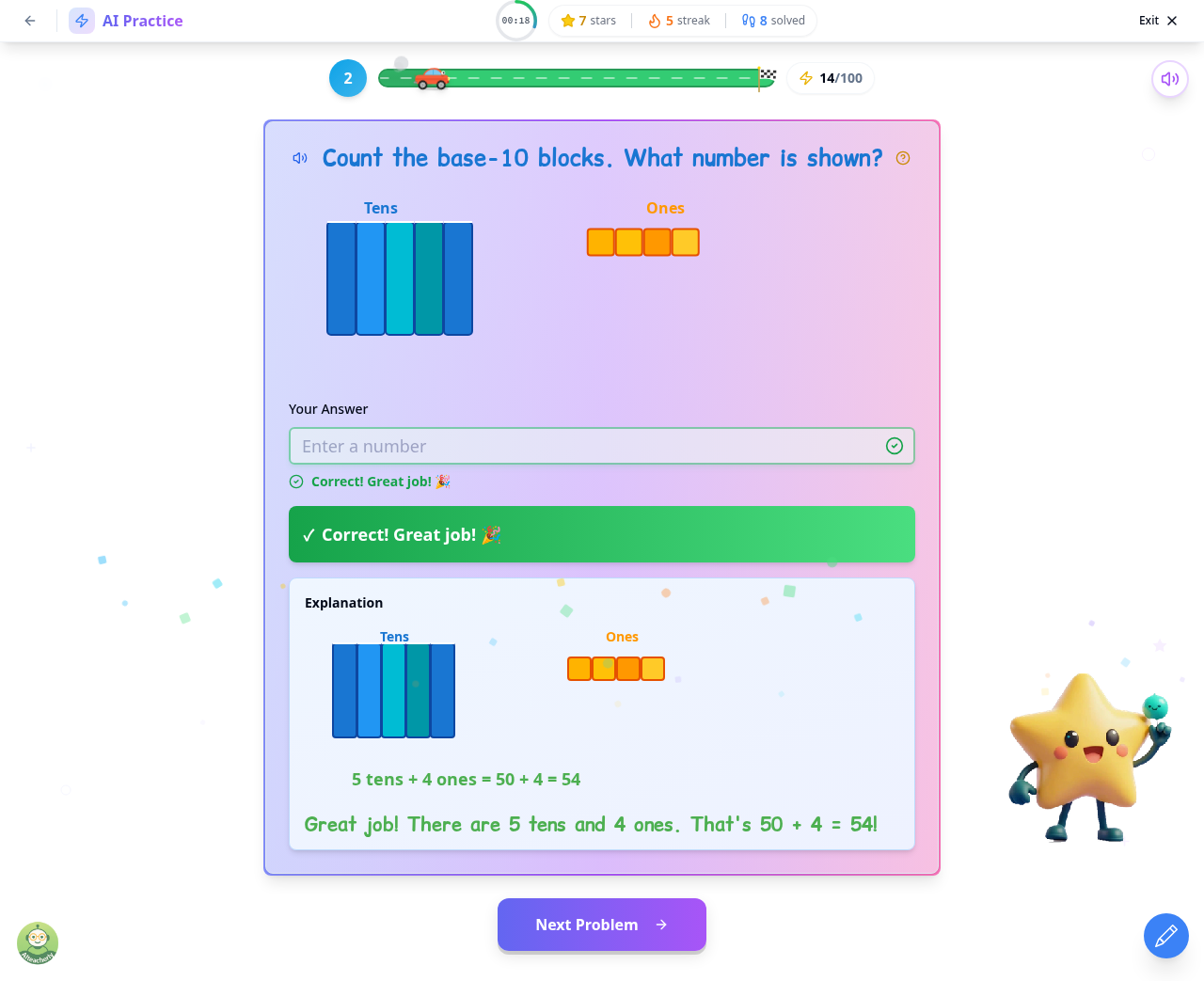
Digital learning platforms bridge the gap between classroom instruction and at-home practice by offering gamified, interactive lessons tailored to second-grade standards. On AI Teacherly, students engage with dynamic visual models that provide instant, encouraging feedback.
Here is what the full interactive lesson looks like on AI Teacherly:
Instead of staring at a static textbook page, children interact directly with digital manipulatives, dragging tens rods and ones cubes into place to solve problems. This scaffolded digital environment keeps students motivated, tracks their progress, and ensures they build rock-solid foundational skills while having fun.
Frequently Asked Questions About 2nd Grade Place Value
What are place value models and why are they important in 2nd grade?
Place value models are visual representations, such as base-10 rods and unit cubes, that show the value of a digit based on its position in a number. In second grade, they form the foundation for understanding two-digit numbers, addition, and subtraction.
How can I teach tens and ones to my child at home?
You can teach tens and ones at home by using everyday objects like bundles of 10 craft sticks for rods and single beans or buttons for ones cubes, or by practicing with digital base-10 block exercises on interactive learning platforms.
Why does my 2nd grader mix up the tens and ones place?
Children often confuse tens and ones because they read numbers from left to right but count objects from right to left. Using color-coded blocks or explicit place-value columns helps reinforce that the left digit represents groups of ten.
Are base-10 blocks better than traditional counting for math?
Yes, base-10 blocks are significantly more effective than traditional rote counting because they give children a physical, visual sense of quantity. Seeing that a ten rod is made of ten individual unit cubes bridges concrete manipulation with abstract numerical thinking.
How do I use visual place value blocks for addition?
To use place value blocks for addition, have your child build both numbers using rods and cubes. Combine the ones first, regrouping ten single cubes into a rod if necessary, and then combine the tens rods to find the total sum.
How much time should we spend practicing math at home?
For second graders, 15 to 20 minutes of focused, low-pressure math practice daily is ideal. Consistency builds strong number sense much faster than infrequent, long study sessions.
Key Takeaways
- Base-10 blocks translate abstract numbers into visual quantities, with long rods representing tens and small cubes representing ones.
- Children should always count groups of tens first before tallying individual ones cubes to avoid counting errors.
- Connecting physical household items like grouped craft sticks to math worksheets reinforces place value concepts naturally.
- Addressing digit reversal early prevents confusion when moving on to two-digit addition and subtraction with regrouping.
- Interactive online lessons on AI Teacherly provide immediate feedback and scaffolded support for second-grade math learners.
Frequently Asked Questions
What are place value models and why are they important in 2nd grade?
Place value models are visual representations, such as base-10 rods and unit cubes, that show the value of a digit based on its position in a number. In second grade, they form the foundation for understanding two-digit numbers, addition, and subtraction.
How can I teach tens and ones to my child at home?
You can teach tens and ones at home by using everyday objects like bundles of 10 craft sticks for rods and single beans or buttons for ones cubes, or by practicing with digital base-10 block exercises on interactive learning platforms.
Why does my 2nd grader mix up the tens and ones place?
Children often confuse tens and ones because they read numbers from left to right but count objects from right to left. Using color-coded blocks or explicit place-value columns helps reinforce that the left digit represents groups of ten.
Are base-10 blocks better than traditional counting for math?
Yes, base-10 blocks are significantly more effective than traditional rote counting because they give children a physical, visual sense of quantity. Seeing that a ten rod is made of ten individual unit cubes bridges concrete manipulation with abstract numerical thinking.
How do I use visual place value blocks for addition?
To use place value blocks for addition, have your child build both numbers using rods and cubes. Combine the ones first, regrouping ten single cubes into a rod if necessary, and then combine the tens rods to find the total sum.
How much time should we spend practicing math at home?
For second graders, 15 to 20 minutes of focused, low-pressure math practice daily is ideal. Consistency builds strong number sense much faster than infrequent, long study sessions.
Ready to make second-grade math engaging and stress-free? Explore our interactive place value lessons and base-10 block activities free on AI Teacherly today!