How to Teach Kindergartener to Tell Time: A Parent's Complete Guide
Wondering how to teach your kindergartener to tell time? This parent-friendly guide breaks down analog clocks, the hour and minute hands, and fun activities to make learning time a breeze at home.
Why Telling Time Is a Big Deal for Kindergarteners
Learning to tell time is one of those foundational skills that opens up a whole new world for your child. It's not just about reading numbers on a clock; it's about understanding how their day works, building independence, and connecting abstract math concepts to real life.
For kindergarteners, telling time is often their first experience with a skill that combines numbers, patterns, and practical application. When your child can look at a clock and understand that "3 o'clock means snack time," they're making a powerful cognitive connection. This builds confidence that extends far beyond just knowing the time.
Many parents feel anxious about teaching this skill, especially if analog clocks have mostly disappeared from their own daily life. Here's the good news: you don't need to be a math teacher to help your kindergartener succeed. With a few simple strategies and some everyday practice moments, you can turn clock reading into a fun bonding activity.
In this guide, you'll learn exactly how to teach kindergartener to tell time, discover the simple secret to reading time to the hour, and find practical ways to practice at home. Whether your child is just starting out or needs a little extra help, these tips will set them up for success.
What Age Should Kids Learn to Tell Time?
If you're wondering whether your kindergartener should already know how to tell time, you're not alone. This is one of the most common concerns parents have, and the answer might surprise you.
Most children are developmentally ready to start learning to tell time between ages 5 and 6, which aligns perfectly with kindergarten. However, this doesn't mean they need to master every aspect of clock reading right away. At this stage, the focus should be on understanding time to the hour (like 3 o'clock or 7 o'clock) rather than reading minutes.
Every child develops at their own pace, and that's completely normal. Some kindergarteners will pick up clock reading quickly, while others may need more time and practice. The key is consistent, low-pressure exposure rather than intensive drilling.
Here's what to expect at different stages:
- Ages 5-6: Understanding the concept of "o'clock" and identifying hour vs. minute hands
- Ages 6-7: Reading time to the half hour (6:30, 2:30)
- Ages 7-8: Reading time to five-minute intervals and understanding quarter hours
If your kindergartener isn't there yet, don't worry. The fact that you're reading this guide means you're already taking the right steps to support their learning.
How Do You Explain the Hour and Minute Hand to a Child?
The biggest hurdle in teaching telling time is helping your child understand that the two hands on a clock have different jobs. Here's a simple way to explain it that works wonderfully for young learners.
The Short Hand (Hour Hand): Tell your child that the short hand is the "hour hand" because it tells us the hour, or what number the clock is on. A helpful memory trick: "Short hand for the short word (hour)." The hour hand moves slowly around the clock, pointing to each number as the hours pass.
The Long Hand (Minute Hand): The long hand is the "minute hand" because it counts the minutes. It moves faster than the hour hand and travels all the way around the clock every hour.
Many lessons use color coding to help children distinguish between the hands. For example, the hour hand might be red and the minute hand might be blue. This visual distinction makes it much easier for kindergarteners to identify which hand is which.
The interactive problem below shows exactly how clock components work in practice:
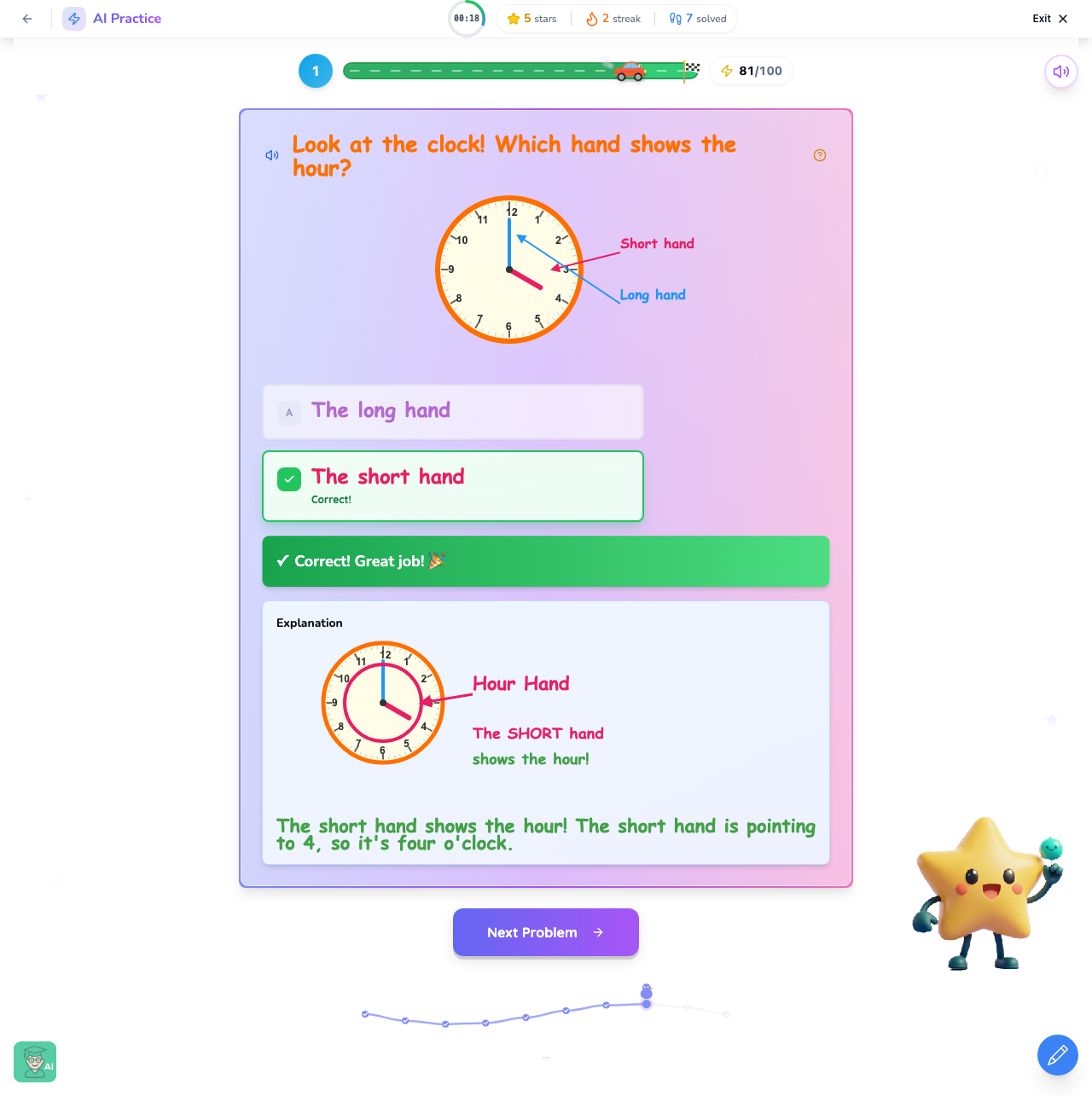
When practicing at home, point to each hand separately and ask your child to name it. Use questions like "Which hand tells us the hour?" and "Which hand is shorter?" Repetition is key at this age, so don't be afraid to ask the same questions many times across different practice sessions.
The Simple Secret to Reading Time to the Hour
Here's the secret that makes telling time click for kindergarteners: When the long hand points to twelve, it's o'clock!
This simple rule is the foundation for all early time-telling. Once your child understands this concept, reading time to the hour becomes almost automatic. Here's how to teach it step by step:
Start with the long hand: Ask your child to find the long (minute) hand. Is it pointing to the 12? If yes, it's "something o'clock."
Then check the short hand: Now look at the short (hour) hand. What number is it pointing to? That's the hour!
Put it together: If the long hand is on 12 and the short hand is on 3, then it's 3 o'clock.
The interactive example below shows this concept perfectly:
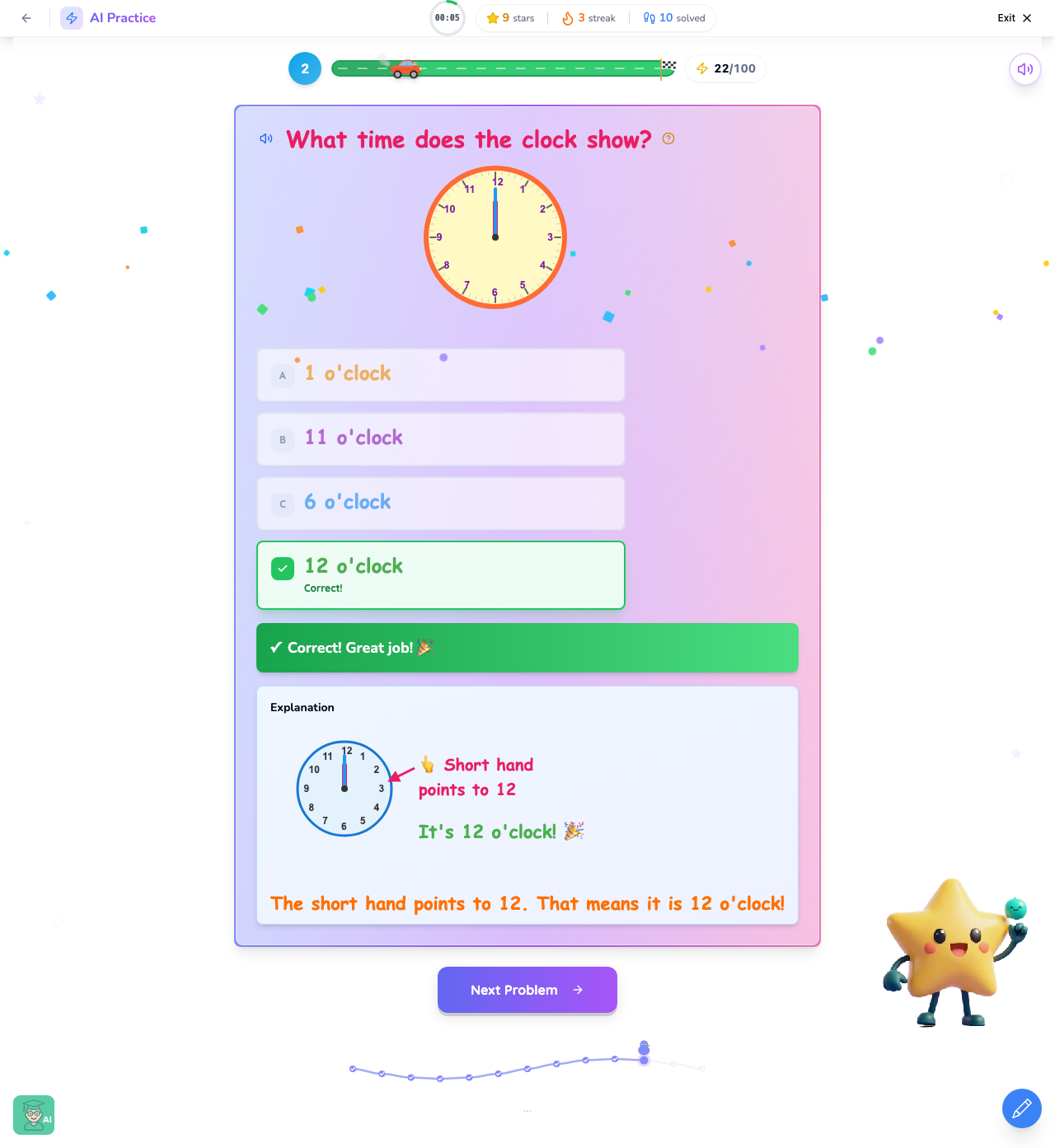
A helpful phrase to practice together: "Short hand for the hour, long hand on twelve means o'clock." Have your child repeat this while looking at different clock faces.
Pro tip for parents: Use a toy clock with movable hands or draw clocks on paper. Set the minute hand to 12 and move only the hour hand to different positions. Ask your child to read each time. This focused practice helps cement the concept before introducing more complex times.
Analog vs Digital: Should You Teach Both?
With digital clocks everywhere, from phones to microwaves, you might wonder if teaching analog clocks is even necessary anymore. The answer is yes, and here's why teaching both actually helps your child understand time better.
Why analog clocks matter: Analog clocks give children a visual representation of time passing. When kids see the hands move around the circle, they develop an intuitive sense of how much time has passed or how long until something happens. This spatial understanding of time is harder to grasp from digital displays alone.
Why digital clocks help: Digital clocks reinforce the numerical aspect of time and are practical for everyday life. Once your child understands analog, digital becomes much easier.
The connection: The most powerful learning moment happens when children realize that both clocks show the same time, just in different ways. When they see that an analog clock with the hour hand on 4 and the minute hand on 12 matches "4:00" on a digital display, everything clicks into place.
The interactive problem below demonstrates this analog-digital connection beautifully:
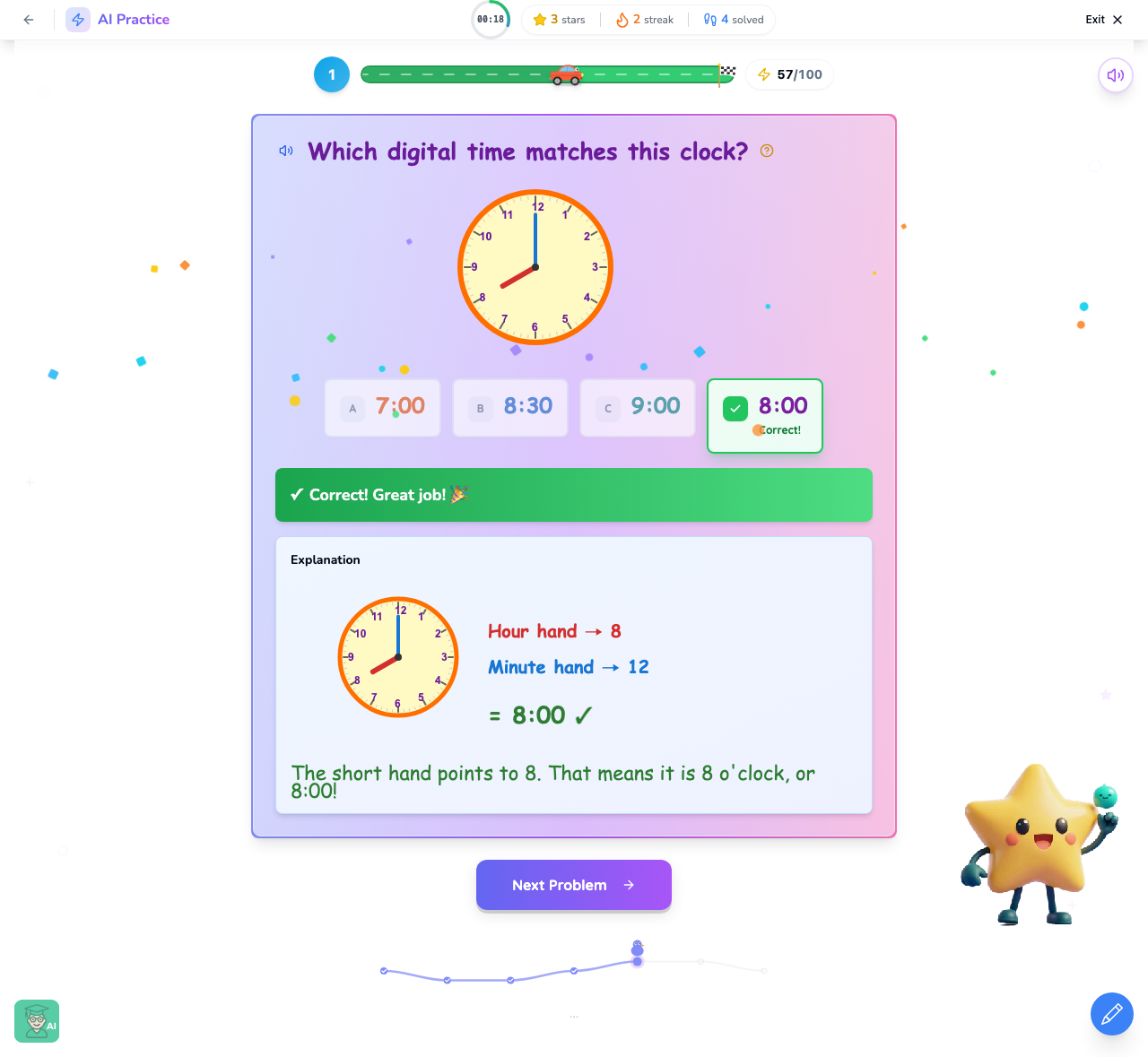
Start with analog clocks to build foundational understanding, then introduce digital as a "translation." Ask questions like "The clock shows 5 o'clock. How would we write that with numbers?" This helps children see time as a concept, not just a reading task.
5 Fun Ways to Practice Telling Time at Home
The best way to teach kindergarteners anything is through play and everyday moments. Here are five engaging ways to practice telling time without it feeling like homework.
1. Make a Daily Schedule Clock Draw a simple clock face and add pictures around it showing daily activities: breakfast at 7, school at 8, lunch at 12, playtime at 3. Reference it throughout the day: "Look, the clock shows 3 o'clock. What does our schedule say we do at 3?"
2. Play "What Time Is It, Mr. Fox?" This classic game gets a learning twist. Instead of just calling out times, show a clock face and have your child read it before taking steps. It combines movement with learning, which helps concepts stick.
3. Use Meal Times as Practice Before each meal, point to the clock and ask "What time is it?" Since meals happen at consistent times, your child gets built-in daily practice with familiar reference points.
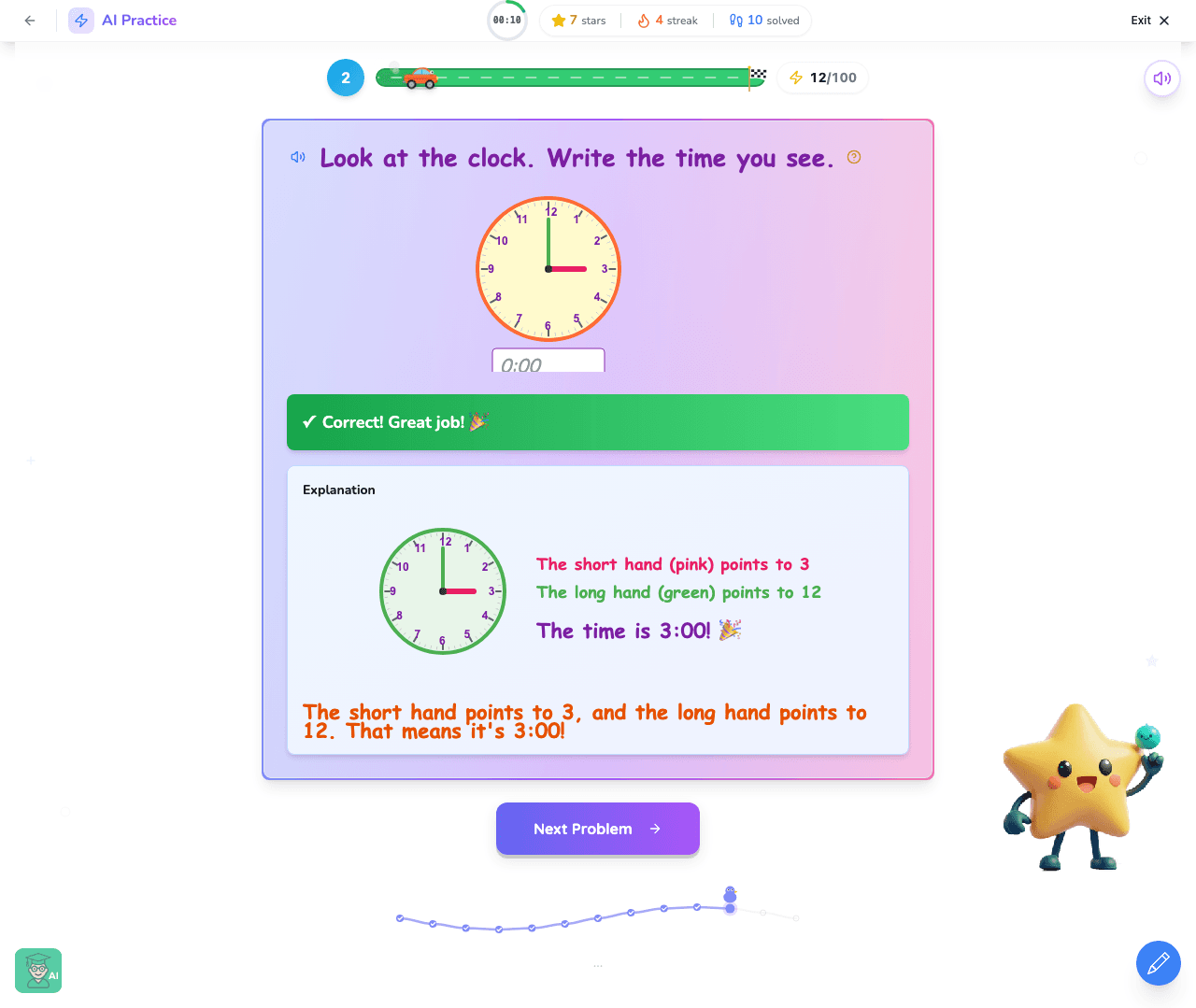
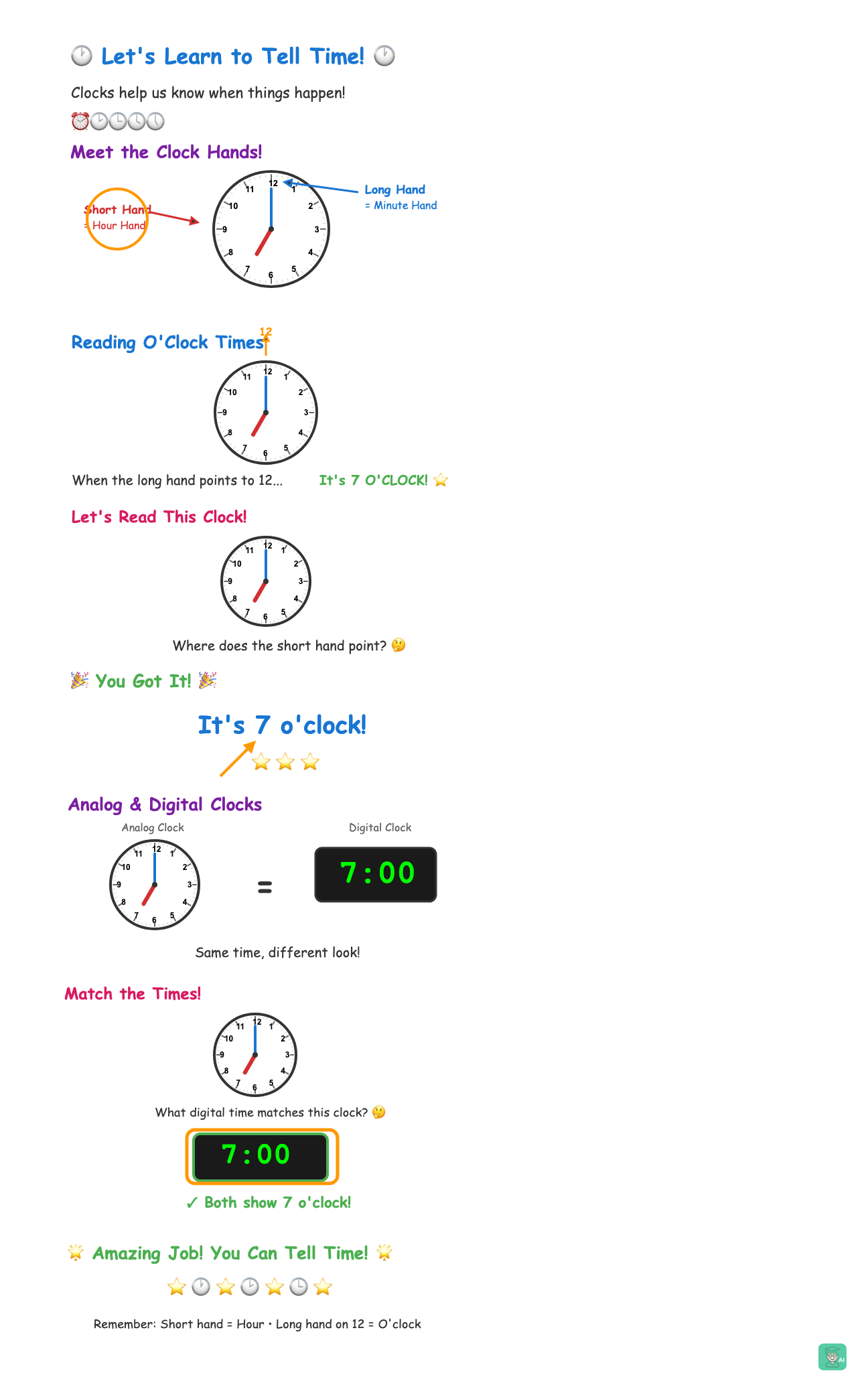
4. Try Interactive Digital Lessons Platforms like AI Teacherly offer engaging, visual lessons specifically designed for kindergarteners learning to tell time. The interactive format keeps kids engaged while providing the repetition they need.
Here's what an interactive telling time lesson looks like on AI Teacherly:
5. Create a Bedtime Countdown An hour before bed, show your child the clock: "It's 7 o'clock now. Bedtime is at 8 o'clock." Then check in: "Now it's almost 8. What does the clock show?" This creates natural motivation to learn.
Common Mistakes Kids Make (And How to Fix Them)
Even with great teaching, kindergarteners often make predictable mistakes when learning to tell time. Knowing what to expect helps you address issues quickly and prevent frustration.
Mistake #1: Confusing the Hour and Minute Hands This is the most common error. Kids look at the longer hand and assume "longer means more important," so they try to read it first.
Fix: Always start practice by asking "Which hand is shorter?" before reading any time. Make it a consistent routine until hand identification becomes automatic.
Mistake #2: Reading the Wrong Number When the hour hand is between two numbers (like between 2 and 3), children often read the higher number.
Fix: Explain that the hour hand is "walking toward" the next number but hasn't arrived yet. If it's between 2 and 3, it's still 2 o'clock until it reaches the 3.
Mistake #3: Forgetting to Check the Minute Hand Some children get excited about identifying the hour and forget to verify that the minute hand is on 12.
Fix: Create a two-step checklist: "First, is the long hand on 12? Then, what number is the short hand on?" The order matters for building good habits.
Mistake #4: Saying the Number Without "O'Clock" Children might say "It's 4" instead of "It's 4 o'clock."
Fix: Model the complete phrase every time and gently prompt: "4 what?" until "o'clock" becomes automatic.
Key Takeaways for Parents
Teaching your kindergartener to tell time doesn't have to be stressful. Here are the most important points to remember as you support your child's learning journey:
Start with the basics: Focus on time to the hour before introducing half hours or minutes. Mastery of "o'clock" builds the foundation for everything else.
Use the magic rule: "When the long hand points to twelve, it's o'clock." This simple phrase unlocks time-telling for most kindergarteners.
Practice in everyday moments: Mealtimes, bedtime, and daily routines offer natural opportunities to reinforce clock reading without formal lessons.
Be patient with hand confusion: Mixing up the hour and minute hands is completely normal. Consistent practice with hand identification solves this over time.
Teach both analog and digital: Understanding that both clock types show the same time deepens your child's grasp of the concept.
Make it fun: Games, interactive lessons, and real-world connections keep kindergarteners engaged and make learning feel like play.
Celebrate progress: Every small step matters. When your child correctly reads "3 o'clock" for the first time, make it a big deal!
Key Takeaways
- Focus on time to the hour before introducing half hours or minutes; mastery of 'o'clock' builds the foundation for everything else
- Use the magic rule: 'When the long hand points to twelve, it's o'clock' to unlock time-telling for kindergarteners
- Practice during everyday moments like mealtimes and bedtime for natural, stress-free repetition
- Be patient with hour and minute hand confusion; consistent practice with hand identification solves this over time
- Teach both analog and digital clocks; understanding both formats deepens your child's grasp of time as a concept
- Make learning fun through games, interactive lessons, and real-world connections to keep kindergarteners engaged
- Celebrate every small win to build confidence and positive associations with learning
Frequently Asked Questions
At what age should my child learn to tell time?
Most children are ready to start learning to tell time between ages 5-6. Focus on time to the hour first, then progress to half hours around age 6-7. Every child develops differently, so consistent low-pressure practice matters more than hitting exact age milestones.
How do I explain the difference between the hour and minute hand?
The short hand is the hour hand because it tells the hour (short word, short hand). The long hand is the minute hand because it counts minutes. Using color-coded clocks helps children visually distinguish between them during practice.
Why do kids find analog clocks harder than digital clocks?
Analog clocks require understanding that two hands show different information and move at different speeds. Digital clocks simply display numbers. However, analog clocks build spatial awareness of time passing, which helps children develop a deeper understanding of the concept.
Should I teach analog or digital clocks first?
Start with analog clocks to build foundational understanding of how time works. Once your child grasps the hour and minute hands, introduce digital as a 'translation.' Seeing both formats show the same time creates powerful learning connections.
What is the easiest way to teach telling time?
Use the simple rule: 'When the long hand points to twelve, it's o'clock.' First identify the minute hand on 12, then read what number the short hour hand points to. Practice this with real clocks during daily routines like meals and bedtime.
How long does it take for a kindergartener to learn to tell time?
With consistent daily practice, most kindergarteners can read time to the hour within 2-4 weeks. Mastering half hours and minutes takes longer. Short, fun practice sessions of 5-10 minutes work better than long drilling sessions.
What are common mistakes kids make when learning to tell time?
The most common mistakes are confusing the hour and minute hands, reading the wrong number when the hour hand is between numbers, and forgetting to check if the minute hand is on 12. Consistent hand identification practice prevents most errors.
How can I make learning to tell time fun for my child?
Turn it into a game! Use daily schedules with pictures, play 'What Time Is It, Mr. Fox?', create bedtime countdowns, and try interactive digital lessons. Connecting clock reading to exciting activities like snack time or playtime builds natural motivation.
Ready to make telling time fun for your kindergartener? Try our free interactive Introduction to Telling Time lesson on AI Teacherly and watch your child master the clock with confidence!